Author Archive

Consent categories in head-mounted displays: non-technical

This decision concerns a European patent related to a head-mounted display system that captures and processes eye images. The Opposition Division (OD) maintained the patent in an amended form according to auxiliary request 1. However, the opponent appealed, and the proprietor defended the patent with additional auxiliary requests 2 to 7. Ultimately, the Technical Board of Appeal revoked the patent. Here are the practical takeaways from the decision of T 0371/23 dated January 20, 2025, of Technical Board of Appeal 3.5.05.

Key takeaways

Implementing user consent categories for sharing biometric information in head-mounted display systems is considered an administrative scheme and does not contribute to the technical character of an invention.

The invention

The patent pertains to a head-mounted display system designed to capture eye images of the wearer, determine biometric information from these images, and present a user interface requesting consent to share this information. The system allows users to select consent categories, and based on their input, it controls the transmission of specific biometric data.

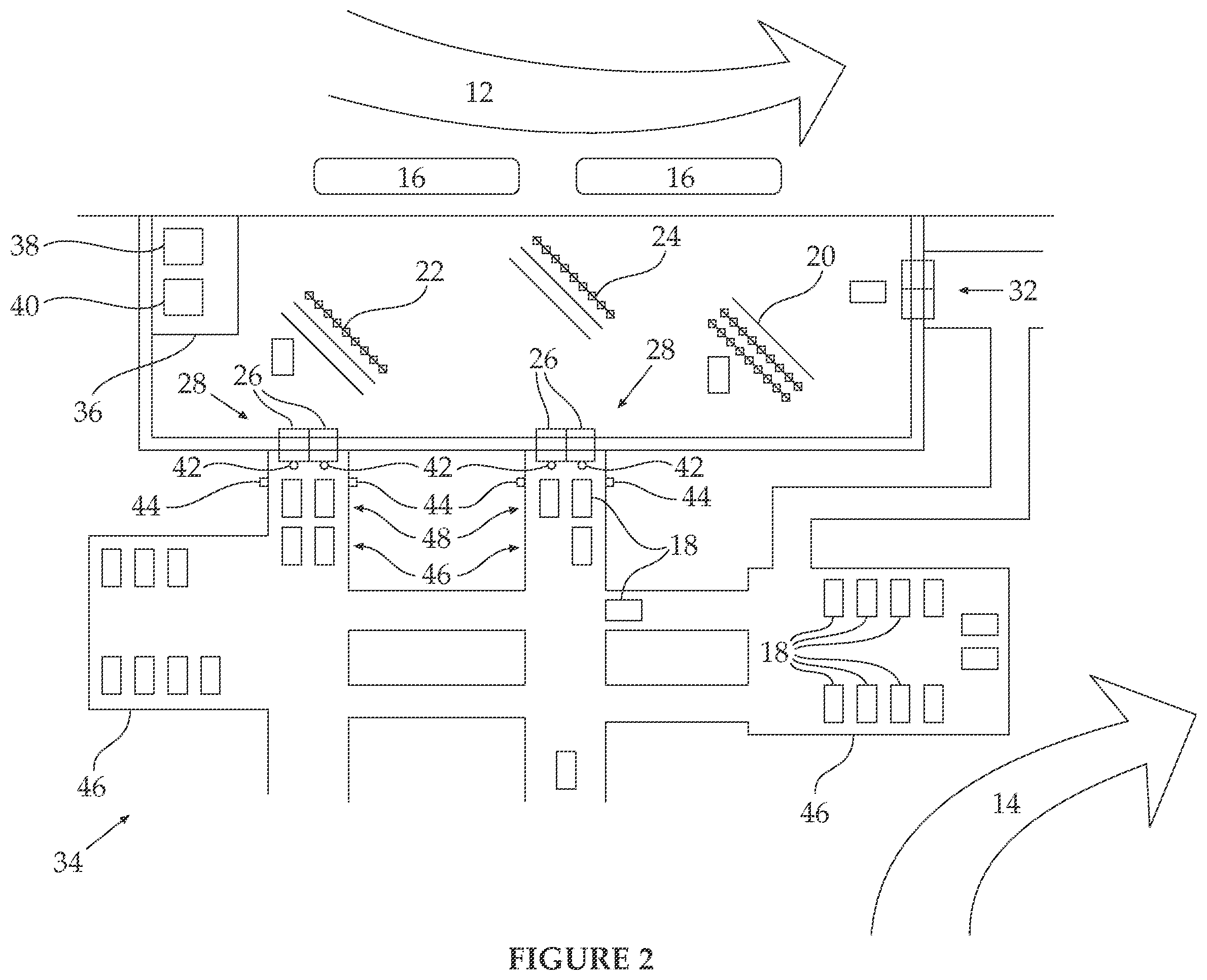
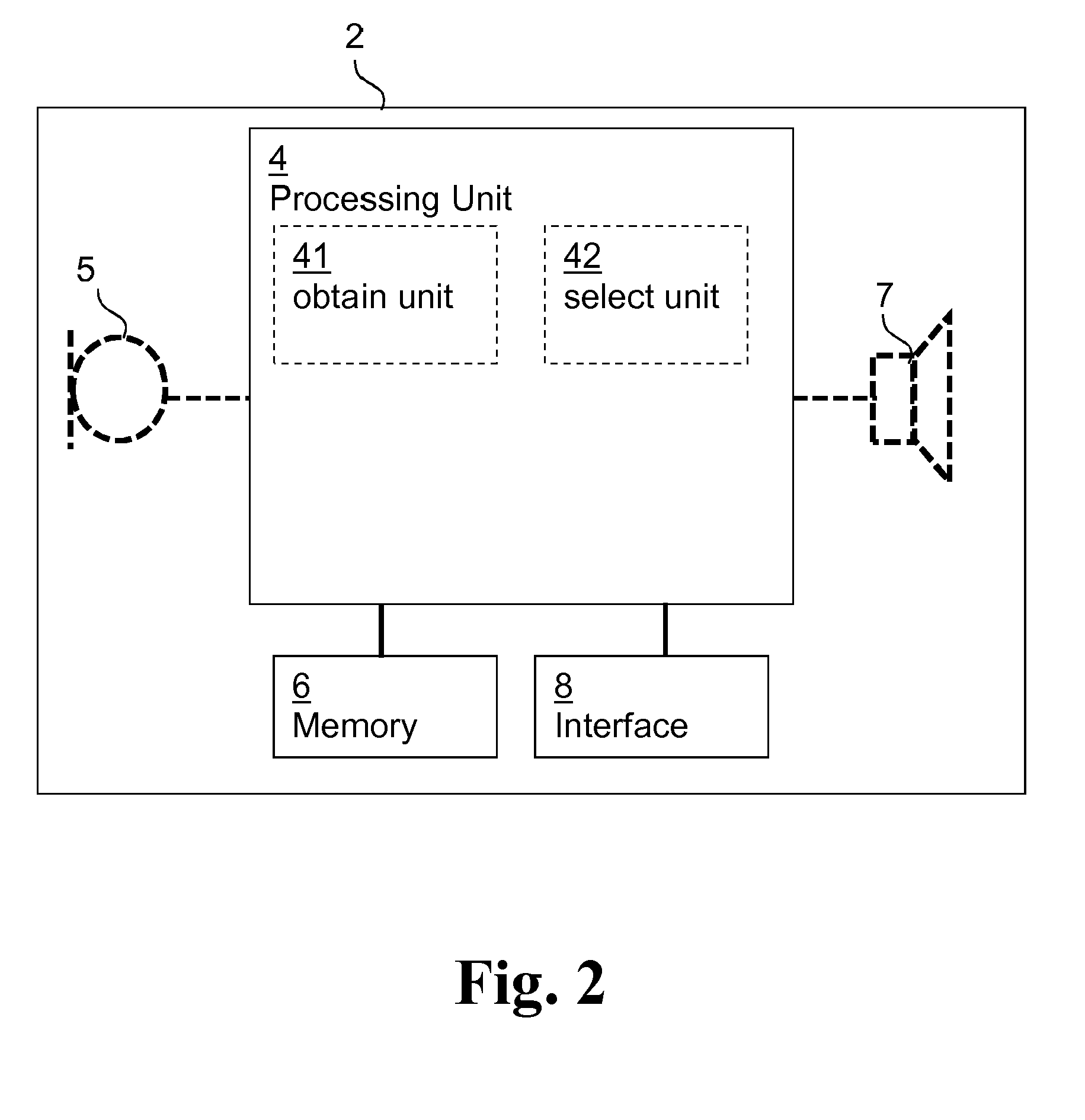
Fig. 2 of EP3433707

Here is how the invention was defined by claim 1:

  • Claim 1 (auxiliary request 1)

  • Claim 1 (auxiliary request 2)

  • Claim 1 (auxiliary request 3)

  • Claim 1 (auxiliary request 4)

  • Claim 1 (auxiliary request 5)

  • Claim 1 (auxiliary request 6)

  • Claim 1 (auxiliary request 7)


Is it patentable?

D1 (US 2014/0139551 A1) was considered as the closest prior art.

  • Auxiliary request 1

The Board disagreed with the OD and found that the subject matter of claim 1 of auxiliary request 1 lacks an inventive step because the distinguishing features merely implement an administrative scheme and do not contribute to the technical character of the invention:

1.4 The board does not agree with the opposition division. As the opponent rightly observed, the human-machine interaction in the case at hand does not control in any manner how the technical transmission of data actually takes place. The user’s consent does not change the way how information is technically transmitted. Instead, it merely gives the user’s approval to the categories of information which can be shared with third parties. However, it is not a “technical task” to give consent to sharing of information. In the absence of a technical task, the opposition division’s application of the test of T 336/14 and T 1802/13 fails from the very beginning. Instead, as the opponent again rightly argues, distinguishing features F1.4.3 to F1.4.8 are merely the implementation of an administrative scheme which cannot contribute to the technical character of the claimed invention.

  • Auxiliary requests 2 to 7

The Board found no inventive step in auxiliary requests 2 to 7:

2.2 As to their substantiation, the proprietor briefly stated for each auxiliary request that it “addresses the objection of insufficiency of disclosure”, “addresses the objection of added subject-matter” or “addresses inter alia the objections of inventive step”. However, it did not further substantiate how these requests actually addressed the opponent’s objections.

2.3 In its preliminary opinion issued under Article 15(1) RPBA, the board stated that, irrespective of admittance issues, the board agreed with the opponent that the objection of lack of inventive step against auxiliary request 1 applied mutatis mutandis to auxiliary requests 2 to 7.

2.4 The proprietor did not reply in substance to the board’s preliminary opinion. After reconsideration, the board sees no reason to change its preliminary opinion.

  • Outcome

The Board found that claim 1 of all auxiliary requests lacked an inventive step. Hence, the Board dismissed the appeal and the patent is revoked.

More information

You can read the whole decision here: T 0371/23 dated January 20, 2025, of Technical Board of Appeal 3.5.05.

Stay in the loop

Never miss a beat by subscribing to the email newsletter. Please see our Privacy Policy.

Privacy policy 
* = Required field

Displaying story album: non-technical

This decision concerns a European patent application relating to a a story album display method and apparatus. The application was refused by the Examining Division. The applicant filed an appeal but was not successful. Here are the practical takeaways from the decision of T 0646/23 dated December 9, 2024, of Technical Board of Appeal 3.5.07.

Key takeaways

A mere processing of non-technical textual information does not make a technical contribution.

Improving the accuracy of search results to correspond more closely to the user’s subjective wishes is in principle not a technical effect.

Normal physical consequences of non-technical decisions cannot support an inventive step.

The invention

The application relates to a story album. The story album function is as follows: A terminal automatically aggregates images in a gallery to make one or more story albums, so that a user can quickly and conveniently review photos of some past important events (cf. paragraph [0002]).

Fig. 6 of EP3706015

Here is how the invention was defined by claim 1:

  • Claim 1 (main request)

  • Claim 1 (auxiliary request 4)

Is it patentable?

D1 (EP 2 187 322 A1) was considered as the closest prior art. The Examining Division refused the application for lack of inventive step over D1. The Board of Appeal in charge arrived at the same conclusion:

  • Main request and auxiliary requests 1 to 3

The Board found that claim 1 of the main request is not clear. The same reasonings are also applied to claim 1 of auxiliary requests 1 to 3.

4.3 The board notes, however, that the claimed “removing” step does not in any way link the step of “identifying content” or its result to the “invalid label” or to the determination of images “with an image similarity greater than a threshold”. Claim 1 does not express that “screening” an image including “identifying content” of the image means, in one alternative, retrieving a metadata label of the image. Nor does claim 1 express that “image similarity” between one or more images is determined on the basis of the identification of the content of the images.

Although the skilled reader of claim 1 may understand that some kind of link between “identifying content” and the “removing” step is intended, on the basis of the wording of the claim they can only speculate what that link might be.

The board therefore concludes that claim 1 of the main request is not clear (Article 84 EPC).

  • Auxiliary request 4

Claim 1 of auxiliary request 4 was not objected for lacking of clarity. Claim 1 of the fourth auxiliary request is directed to a “story album display method”. According to claim 1:

  • (a) A terminal first selects (“aggregates”) N images from an image collection on the basis of photographing time or photographing location.
  • (b) The terminal then removes a number of images that are determined to be “invalid” to obtain M remaining images, where M < N. An image may be determined to be invalid if it has an “invalid label” or if its “image similarity” to another image is greater than a threshold (“wherein the invalid image comprises an image with an invalid label, or one or more images with an image similarity greater than a threshold”). The remaining M images form a “story album”.
  • (c) On the basis of “an image feature of at least one of the M images”, the terminal determines a “theme associated with the M images”. The terminal modifies this theme, referred to as “the theme of the story album”, on the basis of “association information that is in a target application and that is associated with the theme of the story album”.
  • (d) The terminal then displays an “album cover” of the story album.

The Board found that claim 1 of auxiliary request 4 differs from the terminal of D1 in that the terminal includes software functionality to select a subset of images from the image collection on the basis of criteria involving image similarity and image metadata, where the image metadata includes photographing time, photographing location and image labels or tags (items (a) and (b)). An image of this subset is then selected for display as “album cover” (item (d)).

However, the Board found that the above difference does not make a technical contribution:

This software functionality, however, does not make a technical contribution. Indeed, it cannot be seen what specific technical effect is achieved by the selection of a subset of images from a larger set of images on the basis of these criteria or by the selection of an “album cover” image from the selected subset of images.

Although a specific implementation in software or hardware of such non-technical functionality may in certain cases have technical aspects, for example relating to determining image similarity, technical details of such an implementation are not claimed.

The Board found that claim 1 of auxiliary request 4 further differs from the terminal of D1 in that a “theme” is determined for the subset of M images on the basis of an “image feature” of one of the M images and “association information” such as calendar information, in accordance with item (c).

The Board found that the above difference does not credibly solve a technical problem:

A method of classifying (or recognising) images on the basis of features extracted from the visual content of the images may in certain cases be technical, in particular if it is based on technical considerations relating to image processing. However, the claim leaves the kind of “image feature” undefined, and paragraph [0137] of the description explains that the theme may be determined on the basis of “image features” reflected by the textual labels associated with the M images. Hence, the determination of a “theme” in the present case encompasses a mere processing of non-technical textual information, which does not make a technical contribution.

Moreover, even if the claimed image selection somehow reliably returns what the user is looking for (which is unlikely given that the method does not require the user to give an indication of what they are looking for), improving the accuracy of search results to correspond more closely to the user’s subjective wishes is in principle not a technical effect.

In the present case, claim 1 does not define any user-interface mechanism for allowing a user to search an image, let alone a new mechanism.

Claim 1 does not specify in any detail how the “story album” image selection of first N images and later M < N images is represented in memory. Such an image selection can be represented, for example, as a bitmap indicating which images of the complete collection of images stored on the phone are part of the selection and which are not. In this case, the “removal” of an image from the selection amounts to flipping the bit corresponding to the image from 1 to 0, and no reduction of memory usage is achieved by reducing the number of images in the selection from N to M.

It is therefore not credible that a reduction in working memory usage is achieved over essentially the whole scope of the claim.

7.8.2 Moreover, even if the removal of an image from the “story album” selection did reduce memory usage, this would merely be the physical consequence of the non-technical decision to remove certain images. Memory usage could be even further reduced by removing all but one image, or by not creating the selection at all. Such normal physical consequences of non-technical decisions cannot support an inventive step (see decision T 2230/10, Reasons 3.7 and 3.8).

  • Outcome

The Board found that claim 1 of auxiliary request 4 lacks an inventive step over a well-known prior-art smartphone. Auxiliary requests 5 and 6 were late filed and not admitted. Finally, the Board dismissed the appeal.

More information

You can read the whole decision here: T 0646/23 dated December 9, 2024, of Technical Board of Appeal 3.5.07.

Stay in the loop

Never miss a beat by subscribing to the email newsletter. Please see our Privacy Policy.

Privacy policy 
* = Required field

Displaying an animation of coupling of list items: non-technical

This decision concerns a European patent application relating to a UI (User Interface) that displays a plurality of thumbnail images on a display screen. The application was refused by the Examining Division. The applicant filed an appeal but was not successful. Here are the practical takeaways from the decision of T 1042/22 dated February 29, 2024, of Technical Board of Appeal 3.5.05.

Key takeaways

GUIs are at the “borderline of patentability”.

GUIs and associated user experiences belong to the sphere of non-technical artistic activity, graphic design and animation.

Features related to user input with physical ergonomic advantages are “more likely” to have technical character than those related to output or to subjective or aesthetic preferences.


The invention

The application relates to an information processing device including a display control unit configured to display a plurality of lists including a first list and a second list each having list items; and perform display of coupling to the first list a list item of the second list that is a sub-list of the first list (see abstract).

Fig. 1 of EP2555104

Here is how the invention was defined by claim 1:

  • Claim 1 (main request)

Is it patentable?

D6 (EP 1 942 401 A1) was considered as the closest prior art. The Examining Division refused the application for lack of inventive step over D6. The Board of Appeal in charge arrived at the same conclusion:

  • Features (iii) and (iv)

Regarding features (iii) and (iv), the appellant tried to argue that the GUI solves a technical problem, which was denied by the Board:

1.3 Regarding features (iii) and (iv), the appellant argued that they enabled the user to recognise the list items to be inserted by the “coupling” before the completion of the “coupling of list items”. It formulated the objective technical problem solved by these features as how to allow a user to perform “coupling of list items” in an easy, intuitive and time-saving manner. The appellant did not contest that the display of “animations” within the meaning of features (iii) and (iv) constitutes a “presentation of information”. Instead, referring in particular to T 336/14 and T 1802/13, it argued that the presentation of information at hand credibly assisted the user in performing a “technical task” by means of a continued and guided human-machine interaction process. The appellant considered “controlling a device based on user input” to be the “technical task” in the case at hand. It argued that “the control of a device based on physical parameters” such as the “amount of the pinch-out operation” and “thresholds” was a “technical control operation”. It further argued that, based on the “visual feedback” provided by the animations of features (iii) and (iv), the user had better control over the device and could, for example, “cancel the coupling of the lists” during the process and revert to the previous state without finishing the coupling process.

However, the board holds that the animations at hand have obviously nothing to do with “controlling the display device”; neither the animations displayed nor the user’s reaction to them are meant to “control” how the display technology behind the display device actually runs. Instead, the “visual feedback” provided by the “animations” of features (iii) and (iv) is related to the so-called operation of “coupling of list items”, which is not a technical task. The fact that it is performed on a screen does not make the task technical. To the contrary, GUIs and associated user experiences belong to the sphere of non-technical artistic activity, graphic design and animation (see T 1681/18, Reasons 2 and T 1762/18, Reasons 3).

1.4 The appellant also emphasised that the “visual feedback” provided by the “animations” of features (iii) and (iv) gave the user better control of the result of their input, allowing more efficient and ergonomically improved interaction with the GUI. The appellant was aware that, according to the case law of the boards of appeal, GUIs were, as the appellant put it, at the “borderline of patentability”. Indeed, most of the decisions it cited, including T 336/14 and T 1802/13, had come to a negative conclusion in this regard. However, repeating statements from the case law that leave an open door for “exceptional cases” and referring to the Guidelines for Examination, which indicate that features related to user input with physical ergonomic advantages were “more likely” to have technical character than those related to output or to subjective or aesthetic preferences, the appellant pleaded that the case at hand was such an “exceptional case”.

However, in the absence of a tangible and credible technical effect beyond the realm of the GUI, ergonomic improvements in interaction with GUIs remain non-technical improvements in design. Thus, features (iii) and (iv) do not contribute to the technical character of the invention.

  • Feature (d)

Regarding feature (d), the appellant tried to argue which similar reasonings as used for features (iii) and (iv), which did not convince the Board.

  • Auxiliary requests

The appellant added more features in the auxiliary request 1, but it failed with similar reasonings as for the main request. Auxiliary requests 2 and 3 were first filed on appeal and were not admitted by the Board due to lack of justification.

  • Outcome

Finally, the Board dismissed the appeal.

More information

You can read the whole decision here: T 1042/22 dated February 29, 2024, of Technical Board of Appeal 3.5.05.

Stay in the loop

Never miss a beat by subscribing to the email newsletter. Please see our Privacy Policy.

Privacy policy 
* = Required field

Improving image quality based on user’s preferences: non-technical

This decision concerns a European patent application relating to an information processing apparatus and method for providing content data to a terminal device. The application was refused by the Examining Division. The applicant filed an appeal but was not successful. Here are the practical takeaways from the decision of T 0631/08 dated March 7, 2014, of Technical Board of Appeal 3.5.01.

Key takeaways

The improvement of image quality (resolution etc) is possibly, but not necessarily, a technical process.

The invention

Claim 1 defines an information-processing apparatus for providing content data to a terminal device, i.e. essentially a content server. Its functions encompass, in a first stage, the storage of features of image data which are of interest to certain users connected via a terminal device to the content server, including an exemplary “target user” and a “similar user” as defined in the claim. Subsequently, this information is used to improve the image quality of a part of an image transmitted to the target user. The improved image part comprises features which resemble those that have been found to be of interest to the similar user, and which can thus be assumed to be of interest to the target user. The improvement is relative, namely “more than” the image quality of the other parts of the image data. Hence, according to the appellant, a reduction of the amount of the image data to be transmitted to the target user is achieved since only the areas of interest have to be transmitted in high-quality.

Fig. 11 of EP1197902

Here is how the invention was defined by claim 1:

  • Claim 1 (sole request)

Is it patentable?

D1 (WO 00/02389 A1) was considered as the closest prior art. The Examining Division found that the invention was to be considered as an obvious computer implementation of non-technical business rules and did not solve any technical problem. Thus, the Examining Division refused the application for lack of inventive step.

The Board of Appeal in charge arrived at the same conclusion:

Firstly, the Board concluded that D1 does not disclose the following features:

4. Present claim 1 defines, as differences to the prior art, a specific profiling of user preferences and a processing step for improving image quality. The preferences of the target user for particular features of image data are determined by analysing the input information delivered from a similar user, i.e. by analysing and storing the input of another user who has similar interests as the target user regarding the features extracted from the image data.

Then, the Board concluded that the technical contribution provided by the these features does not go beyond the normal computer implementation of a non-technical concept of user profiling and content presentation:

5. Determining and storing user profiles is typically done for promotion and marketing purposes and does per se not involve the use of technical means or any other technical aspects. Compilation and analysis of data concerning human behaviour and interests are activities closely related to business methods which are excluded from patentability. The Board considers that such activities as profiling of human behaviour for promotion or other business purposes lack technical character and are as such not able to contribute to inventive step even if carried out as a computer implemented process. The appellant has argued that the invention provides an innovative way of choosing the parts of an image that are likely to be of interest to a user. The Board cannot accept this argument since the claimed process performs the same steps a human being might choose to take in the same circumstances, viz. collect information about users’ interests (non-technical), group the users accordingly (non-technical), and present information to a target user on the assumption of similarities of personal interests (non-technical). Merely automating this process involved no inventive step.

6. There remains in claim 1 the step of improving the image quality. Unlike profiling, the improvement of image quality (resolution etc) is possibly, but not necessarily, a technical process. An improvement of image quality for aesthetic purposes, for example, would normally not contribute to the technical solution of a technical problem and thus not qualify as technical in terms of a patentable invention. Present claim 1 defines that the image quality of the image parts likely to be of interest according to the target user’s preferences is improved “more than the image quality of the other parts of the image data” (see the claim wording). Hence, the improvement is only a relative improvement between parts of the image, and can in fact be achieved by decreasing the quality of other parts of the image without any improvement of image quality at all (see eg dependent claim 8). Hence, the claimed processing means does not necessarily improve the technical image transmission and rendering process but is simply employed to attract the user’s attention to certain information contents, i.e. a kind of “value-added content” as referred to in claim 1. The image improvement as defined in claim 1 is thus not a technical function or feature of the invention and does consequently not contribute to inventive step.

Finally, the Board concluded that the requirement of inventive step is not fulfilled. Hence, the appeal was dismissed.

More information

You can read the whole decision here: T 0631/08 dated March 7, 2014, of Technical Board of Appeal 3.5.01.

Stay in the loop

Never miss a beat by subscribing to the email newsletter. Please see our Privacy Policy.

Privacy policy 
* = Required field

Providing augmented reality overlays in the context of social networks based on geographic location: technical (but obvious)

This decision concerns a European patent application relating to techniques for providing augmented reality overlays in the context of social networks based on geographic location. The application was refused by the Examining Division. The applicant filed an appeal but was not successful. Here are the practical takeaways from the decision of T 1066/22 dated October 28, 2024, of Technical Board of Appeal 3.5.06.

Key takeaways

Being able to use features/applications offline is a desire that can be assumed.

The invention

The application relates to techniques for providing augmented reality overlays in the context of social networks and content creation for posting on such networks. Machine learning models based on geographic location are used to recognize objects in the users’ camera view and recommend, or apply, appropriate overlays. When the user changes location, the machine learning models are replaced accordingly.

Fig. 1 of EP3343441

Here is how the invention was defined by claim 1:

  • Claim 1 (main request)

Is it patentable?

D4 (MIN WEIQING ET AL: “A survey on context-aware mobile visual recognition”) was considered as the closest prior art. The Examining Division refused the application for inter alia lack of inventive step over D4. The Board of Appeal in charge arrived at the same conclusion:

Firstly, the Board concluded that D4 does not disclose the following features:

“based on the location information, machine learning models are downloaded such that object recognition is performed locally on the user’s mobile device using the downloaded machine learning models,

wherein as the location changes, machine learning models associated with previous location information are removed and replaced with machine learning models associated with the current location”.

On the contrary, in D4, the location-based classifiers reside on the server (i.e., instead of being downloaded).

According to the Board, those distinguishing features have a technical effect and solve a technical problem, but the solution is obvious:

3. According to the Examining Division (point 4.2 in the decision) the objective technical problem is to allow an offline use of the recognition methods. This requires the download of the location-based object classifiers (point 4.2, see also point 6). The replacing of the older ones is then, in the Examining Division’s view, “standard housekeeping”.

5. The Board finds the analysis of the Examining Division to be convincing.

5.1 Being able to use features/applications offline is a desire that users can be assumed (actually, are known) to have had at the relevant priority date. Accordingly, it is a reasonable objective technical problem for the skilled person to address, whether D4 mentions it or not. This requires, necessarily, the download of the location based object classifiers to the device.

5.2 Removing data which is no longer needed appears then as an obvious option, for instance in order to save storage space on the device.

6. Regarding the argument of the Appellant that this analysis overlooks the synergy between the distinguishing features, the Board remarks the following.

6.1 Article 56 EPC states that an invention shall be considered as involving an inventive step if, having regard to the state of the art, it is not obvious to a person skilled in the art.

6.2 As argued above and in agreement with the Examining Division, the Board considers that the invention is the obvious solution of a technical problem that the skilled person would have considered in view of the prior art. The mere fact that the considered technical problem does not reflect all effects achieved by the invention cannot disprove the conclusion that the invention was obvious over the prior art.

Finally, the Board concluded that claim 1 of the main request lacks an inventive step. All the other requests could not overcome this objection. Hence, the appeal was dismissed.

More information

You can read the whole decision here: T 1066/22 dated October 28, 2024, of Technical Board of Appeal 3.5.06.

Stay in the loop

Never miss a beat by subscribing to the email newsletter. Please see our Privacy Policy.

Privacy policy 
* = Required field

Obtaining position information of a moving body: non-technical

This decision concerns a European patent relating to a display device including a present position information obtaining unit configured to obtain present position information of a moving body and a display control unit. The patent was maintained in an amended form after opposition proceedings but revoked entirely after the subsequent appeal proceedings. Here are the practical takeaways from the decision of T 1596/21 dated July 12, 2024, of Technical Board of Appeal 3.5.04.

Key takeaways

A feature defining a presentation of information produces a technical effect if it credibly assists the user in performing a technical task by means of a continued and/or guided human-machine interaction process.

Lowering the cognitive burden of a driver is not a technical task.

The invention

According to the application, a display device obtains the current position of a moving body and uses a control unit to display information about objects through a transparent member. This member is between the traveler’s viewpoint and the scenery. If the displayed information is too close to the road, the control unit shifts it outward.

Fig. 3 of EP2793193

Here is how the invention was defined by claim 1:

  • Claim 1 (main request)

Is it patentable?

D3 (US 2004/0193331 A1) was considered as the closest prior art.

The Opposition Division decided that the seventh auxiliary request then on file met the requirements of the EPC.

The Board of Appeal in charge came to a different conclusion and found that claim 1 lacked an inventive step.

Firstly, the Board concluded that D3 does not disclose the following features:

the display control unit (4) is configured to change a display position of the information on the object to an outward direction of a road (71) in a case that the display position of the information on the object based on the present position information is inside the road (71)

Then, the Board assessed whether the above distinguishing features have a technical effect and came to a negative conclusion:

15.1 In line with the established case law of the boards, a feature defining a presentation of information produces a technical effect if it credibly assists the user in performing a technical task by means of a continued and/or guided human-machine interaction process. Such a technical effect is considered credibly achieved if the assistance to the user in performing the technical task is objectively, reliably and causally linked to the feature. This is not the case if the alleged effect depends on subjective interests or preferences of the user (see Case Law of the Boards of Appeal of the European Patent Office, 10th edn., 2022 (CLBoA), I.D.9.2.10 b)).

15.3 The board is not convinced that the display position of the information on an object specified in the distinguishing features (i.e. inside or in “an outward direction of a road”) objectively enables a driver to better and more safely control and navigate a vehicle along the road.

Firstly, the board agrees with the opposition division that changing the display position “to an outward direction of a road” does not necessarily mean that the display position is moved completely out of the road (see point 16.7 of the decision under appeal). Thus, the displayed information after the change of display position may still hide a part of the road including objects relevant to the driver’s safety. In such a case, the driver’s safety is conditioned by the scene, not the change in display position.

Secondly, changing the display position “to an outward direction of a road” (possibly to a position as far away from the road as allowed by the size of the transparent member and the display range of the light sources) causes the driver to deviate their gaze from the (central part of) the road, this possibly being detrimental to safety depending on the scene, irrespective of the nature of the object for which information is displayed. Whether this is less detrimental to safety than displaying the information on the object inside (or at a more central position in) the road depends on whether and where objects relevant to the driver’s safety are situated on the road as well as the driver’s preferences and cognitive aptitudes (see page 17 of the statement of grounds of appeal: “subjective preferences”).

As an aside, the board notes that claim 1 also covers cases in which the information on the object is displayed first at a position inside the road and then moved on the transparent member to a position outside the road. Such visual “animation” on the transparent member is clearly detrimental to safety.

15.5 Even assuming, arguendo, that the distinguishing features helped the driver focus on certain information (e.g. the information whose display position inside the road is not changed), the board still finds that the distinguishing features have no technical character. As argued by the appellant during the opposition proceedings (see point 19.9 of the decision under appeal) and on page 17 of the statement of grounds of appeal, the distinguishing features do not specify the object or the information that is displayed. Thus, the displayed information may be an indication of the model of a vehicle on the road, the name of a facility on the side of the road or (unspecified) information indicating a road sign already present along the road (i.e. “this is a winding road”). Although the driver may take informed decisions on the basis of such information, the information itself is purely cognitive and does not provide the driver with technical instructions helping them to, for example, avoid accidents (see also CLBoA I.D.9.2.10 c)).

15.6 Paragraph [0053] of the application as filed, cited by the respondent in point 3.5 of the reply to the appeal, specifies that “when the information to be displayed outside the roadway is actually displayed inside the roadway, it could cause misunderstandings to the driver and possibly too much information could be displayed inside the roadway”. In view of this, the problem underlying the patent in fact relates to lowering the cognitive burden of the driver. It is established case law that this problem is not technical (see CLBoA, I.D.9.10 b)i) and iii)).

Finally, the Board concluded that claim 1 of the main request lacks an inventive step. All the other requests could not overcome this objection. Hence, the European patent was revoked.

More information

You can read the whole decision here: T 1596/21 dated July 12, 2024, of Technical Board of Appeal 3.5.04.

Stay in the loop

Never miss a beat by subscribing to the email newsletter. Please see our Privacy Policy.

Privacy policy 
* = Required field

Storing and retrieving biomedical information: non-technical

This decision concerns a European patent application relating to a system for storing and retrieving biomedical informationHere are the practical takeaways from the decision of T 1199/20 (Medical information service/ACTX) dated July 11, 2024, of Technical Board of Appeal 3.5.01.

Key takeaways

Information modelling (using a data structure) is an intellectual activity and cannot contribute to the technical character of the invention unless it serves a technical purpose.

De facto changes in the memory usage or the processing speed are not suitable criteria for distinguishing between technical and non-technical features.

The invention

The claimed system stores biomedical information in a three-level hierarchical data structure. A node at each level is linked to one or more nodes at the adjacent level(s). Each clinical-action node stores medical information and one or more (Boolean) expressions specifying combinations of genomic variants for which the medical information is relevant. When queried for information about a patient, the system retrieves the medical information of those clinical-action nodes whose expressions match the patient’s genomic variants. The retrieved information may relate e.g. to the effectiveness or adverse effects of a medicament.

Fig. 15 of EP2962270

Here is how the invention was defined by claim 1 of auxiliary request 3 (which was relevant for assessing the inventive step):

  • Claim 1 (auxiliary request 3)

Is it patentable?

The examining division refused the European patent application for inter alia lack of inventive step (Article 56 EPC) over the notoriously known prior art of a distributed information system.

The outcome was not changed after the appeal. The Board of Appeal made the following reasonings regarding auxiliary request 3:

2.3 The Board agrees that a generally known distributed information system can be taken as a starting point for assessing inventive step. Such a system comprises (virtual) data facilities for storing information and (virtual) servers for receiving user queries, retrieving and returning relevant information.

Claim 1 essentially differs by the data structure, specifying the types of stored data and their relationships.

The Board agrees with the examining division that the data structure is not technical. It describes the organisation of biological data at an abstract logical level, which is in the realm of information modelling (as noted in point 2.2 of the decision under appeal). Information modelling is an intellectual activity and cannot contribute to the technical character of the invention unless it serves a technical purpose (see e.g. T 49/99 – Information modelling/INTERNATIONAL COMPUTERS, point 7). As elaborated in more detail below, the Board does not consider that the claimed data structure serves such a purpose.

First: the claimed “medical information” is broad and can contain non-technical information

2.5 Firstly, they argued that retrieving medical information relevant to a patient’s genomic variants was a technical purpose since this information objectively described a human being. The appellant cited section G-II, 3.3 of the Guidelines for Examination, according to which the processing of biological data might serve a technical purpose, such as providing a medical diagnosis or estimating a genotype.

The Board agrees that in certain cases the provision of a medical diagnosis or a genotype estimate might be regarded as a technical purpose. However, the system of claim 1 retrieves “medical information”. This broad term encompasses administrative or financial details related to health care, such as information about suitable insurance policies or the cost of medical treatments. Therefore, the Board considers that retrieving such general information does not constitute a technical purpose for the claimed data structure.

The Board furthermore notes that claim 1 only defines the data structure, i.e. the types of stored data and their relations, but not the actual content of the stored information, i.e. which medical information, expressions and variants are stored and linked. The retrieved information, however, can only be as good as the stored information. Since the latter is not part of the claim, it is impossible to say anything about the relevance or objectivity of the retrieved medical information. Technical advantages or achievements that depend on the undisclosed content of stored information cannot form the basis for assessing inventive step (see e.g. T 1153/02 – Diagnostic system/FIRST OPINION, point 3.6).

2.6 In this context, the appellant asserted that the system of claim 1 did not merely retrieve pre-stored patient data but could infer new information about patients from their genomic data and the generic information stored in the data structure.

The Board notes, however, that the novelty of retrieved information does not make this information relevant. As claim 1 does not specify the stored content, it permits linking any variants to any medical information, potentially allowing the storage and retrieval of biologically meaningless or factually erroneous information.

Second: the data stored in the claimed data structure are not functional

2.7 Secondly, the appellant argued that the data structure was characterised by functional data indexing stored information by genetic variants. It defined a particular way of storing, retrieving, and processing data which affected the system’s storage space and processing speed. The appellant referred to earlier decisions, in particular T 1351/04 (File search method/FUJITSU) and T 1159/15 (Model determination system/Accenture), in which the boards of appeal had recognised such data structures as technical.

In the Board’s view, however, the data stored in the claimed data structure are not functional as they do not comprise or otherwise reflect any technical aspects of the system. Rather, the data structure defines a conceptual model of biological information that takes into account the inherent hierarchical properties of the modelled information.

2.8 Furthermore, the Board finds that decisions T 1351/04 and T 1159/15 are not relevant to the present case:

In T 1351/04, it was held that a data structure defining a search index was technical since the information it comprised was intended to control the computer by directing it to a certain memory location (see points 7.2 and 9). The information stored in the data structure of claim 1, however, is not intended to provide such a functionality. The system does not use the patient’s variants to access and retrieve clinical-action nodes. Instead, it retrieves clinical-action nodes based on clinical actions specified in the query and only uses the patient’s variants to assess the relevance of the retrieved information.

In T 1159/15, the invention related to a hierarchical data structure storing cognitive data as well as instructions for aggregating these data from a lower to a higher level. The deciding Board held that the instructions were functional data as they defined how the system responded to a query independently of the cognitive data (point 5). The data structure in claim 1, however, does not comprise any system instructions that are independent of the stored biological information.

The Board in case T 1159/15 further held that the data structure was technical because it defined a particular way of storing, retrieving and processing data which affected the storage space and the speed of processing (point 5.1). The present Board, however, notes that any data structure or algorithm (whether technical or not) when implemented on a computer would affect the computer’s storage space and speed of processing. Therefore, in the Board’s view, de facto changes in the memory usage or the processing speed are not suitable criteria for distinguishing between technical and non-technical features (see e.g. T 1227/05 – Circuit simulation/Infineon, point 3.2.5 and T 1954/08 – Marketing simulation/SAP, point 6.2).

Summary: the claimed data structure is an abstract model of biological information

2.9 In summary, the Board judges that the data structure in claim 1 is an abstract model of biological information. It does not contribute to the technical character of the invention because it neither serves a technical purpose nor involves any technical considerations about the internal functioning of the system. The Board thus agrees with the examining division that the data structure is non-technical and forms part of the requirements specification given to the skilled person for implementation. The Board considers that the claimed implementation amounts to straightforward automation of these requirements that would have been obvious to the skilled person.

Finally, the Board concluded that claim 1 of auxiliary request 3 lacks an inventive step. All the other requests could not overcome this objection. Hence, the European patent application was finally rejected.

More information

You can read the whole decision here: T 1199/20 (Medical information service/ACTX) dated July 11, 2024, of Technical Board of Appeal 3.5.01.

Stay in the loop

Never miss a beat by subscribing to the email newsletter. Please see our Privacy Policy.

Privacy policy 
* = Required field

Displaying inventory instructions on electronic price labels: non-technical

This decision concerns a European patent application relating to electronic price label and electronic price label systemHere are the practical takeaways from the decision of T 1637/20 (Displaying inventory instructions on electronic price labels/MariElla) dated May 7, 2024, of Technical Board of Appeal 3.5.01.

Key takeaways

The inventory task itself, i.e. manually counting products on a shelf, lacks a technical aspect. Thus, a visual prompt to execute such a task cannot be deemed technical either, unlike assisting a person in performing a technical task.

The invention

The invention concerns electronic price labels that indicate to store personnel which products require inventory. An electronic price label system transmits an instruction (“inventory indication command”) to an electronic price label which, for example, inverts the display colors or activates an LED. In this way store personnel are informed that the products associated with the price label require inventorying. Once the inventory check is completed, the electronic price label receives an instruction (“inventory indication stop command”) to revert to its normal colors or switch off the LED, signalling that the products have been inventoried.

Figure 1 of EP3327649

Here is how the invention was defined by claim 1 of the main request:

  • Claim 1 (main request)

Is it patentable?

The examining division found that claim 1 of the main request was not inventive over D1 (WO 2015/136146 A1). In their view, the distinguishing features related to a non-technical inventory management scheme, which did not contribute to inventive step, and well-known implementation options such as electronic price labels with LEDs – it was inter alia referred to D2 (EP 0 837 439 A2).

The Board of Appeal arrived at the same conclusion:

6. D1 discloses an electronic price label system comprising electronic price labels and a base station, for providing and displaying product related information, e.g. a price, promotion or discount (see page 7, lines 6 to 10, page 12, lines 10 to 14 and Figure 3).

The Board agrees with the appellant that D1 does not disclose the use of the electronic price label system for displaying inventory information or its connection to an inventory management system with a product database. Furthermore, D1 does not disclose the manner in which the inventory information is displayed, i.e. by “turn[ing] indication light source on and/or us[ing] inverted colours on the display”.

7. The Board, however, judges that these distinguishing features are essentially non-technical requirements which, in line with the Comvik approach (see T 641/00 – Two identities/COMVIK), are given to the technically skilled person to implement.

Typically, inventory management is the responsibility of a store manager. For example, the manager instructs staff to conduct routine inventory checks, such as counting the daily inventory of milk cartons and updating the inventory database accordingly. These instructions might be communicated verbally or in writing, such as through a note affixed to the shelf containing the products.

The store manager is familiar with conventional electronic price labels and their use for providing and displaying product-related information, such as pricing, promotions or discounts (see D1, page 7, lines 6 to 10). The use of electronic labels as opposed to paper labels offers the advantage, also known to the manager, that manual work and errors are reduced.

Therefore, the Board judges that the store manager would come up with the idea of using this well-known advantage also in the area of inventory management, in particular to indicate to store personnel the need for stocktaking for certain products.

8. In light of the foregoing, the Board concludes that the desire to use electronic price labels for informing store personnel about inventory tasks can be included in the problem formulation. In other words, the store manager would ask the technical expert in electronic (shelf) labels to supplement the price information with an indication that the products associated with the electronic price label must be inventoried.

9. Faced with this task, given the electronic price label system of D1, the skilled person would have arrived at the claimed solution without involving an inventive step.

He would use the central computer for transmitting data/control instructions, specifically inventory indications, to be displayed on electronic price labels (see D1, page 12, lines 10 to 14 and Figure 3). Notably, the claim does not specify the trigger for sending these instructions – this could be done manually by the store manager. Additionally, the skilled person would recognise the necessity for the central computer to be connected to the system required to provide the necessary inventory data, for example an inventory management system with a product database.

Moreover, the Board judges that the way in which inventory instructions are visually displayed, whether through inverting display colors or activating LEDs, depends on subjective preferences, such as what store staff or managers find visually appealing. Implementing such visual displays would have been obvious to the skilled person – see also D1, page 7, lines 20 to 23 or D2, column 3, lines 35 to 49.

10. The inventory task itself, i.e. manually counting products on a shelf, lacks a technical aspect. Thus, a visual prompt to execute such a task cannot be deemed technical either, unlike assisting a person in performing a technical task. In particular, the Board cannot see how this would facilitate conducting inventory checks with reliability from a technical standpoint, as the determination to conduct the checks and the accuracy of the counting rests entirely with the store personnel. Moreover, executing the inventory task while the store remains open is unrelated to the manner in which the inventory instructions are communicated to store personnel.

Finally, the Board concluded that claim 1 of the main request lacks an inventive step. The auxiliary request could not overcome this objection. Hence, the European patent application was finally rejected.

More information

You can read the whole decision here: T 1637/20 (Displaying inventory instructions on electronic price labels/MariElla) dated May 7, 2024, of Technical Board of Appeal 3.5.01.

Stay in the loop

Never miss a beat by subscribing to the email newsletter. Please see our Privacy Policy.

Privacy policy 
* = Required field

Managing content subscriptions: non-technical

This decision concerns a European patent relating to a media guidance application for managing accounts for subscription services. Granted in 2019, the patent subsequently faced opposition. The opposition proceedings concluded in 2021, with the patent being upheld in its granted form. However, the opponent filed an appeal and prevailed, resulting in the revocation of the patent. Here are some practical takeaways from the decision T 2202/21 of February 27, 2024, of Technical Board of Appeal 3.5.03.

Key takeaways

“Management of credentials” is  an administrative task, analogous to maintaining an inventory of automobile spare parts.

The mere use of a (trusted) third party to manage the subscription credentials does not provide as such any additional security.

The invention

The invention relates to managing accounts for subscription services by a media guidance application. For example, by monitoring user activity and managing user accounts on behalf of a user, the media guidance application may recommend subscription services and/or terms of a subscription service tailored to the individual needs of the user.

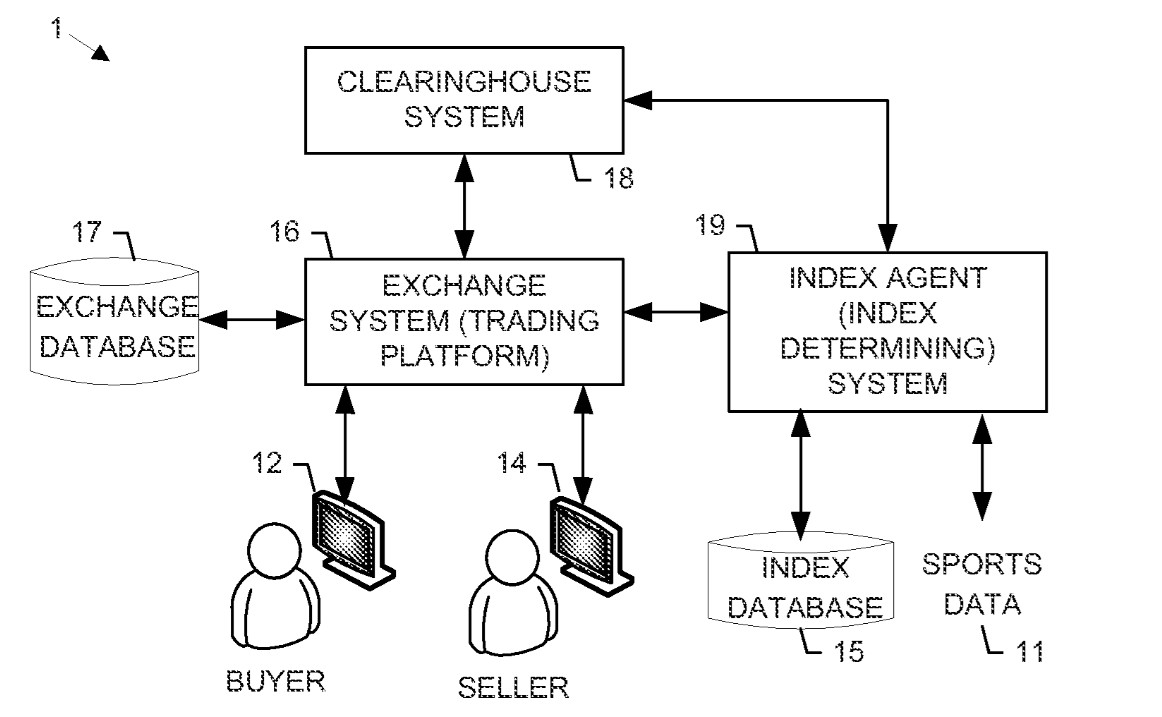
Figure 2 of EP3369233

Here is how the invention was defined by claim 8 (the only independent method claim) of the patent in its originally granted form:

  • Claim 8 (granted) with feature subdivisions

Is it patentable?

D2 (US 8 843 736 B2) was the most relevant prior art document in the opposition proceedings and the subsequent appeal proceedings. The Opposition Division (OD) found that claim 8 involves an inventive step over D2. However, the Technical Board of Appeal 3.5.03 (TBA) had another opinion.

The OD and the TBA had the same assessment regarding which features are distinguishing features, but they had different opinions regarding the inventive step.

Distinguishing features

The following features were found as the distinguishing features:

  • (a) A successful comparison of the first authentication key against a plurality of acceptable authentication keys precedes the storage of the “first user account” at the content provider server [features M8.3 and M8.4].
  • (b) The content aggregator server – rather than the user equipment device (“CE device 12”) – issues the request for the service including the second authentication key [feature M8.6].

Technical effects and objective technical problem

The TBA disagreed with the OD regarding the formulation of the technical task:

1.1.7 The opposition division’s formulation of the objective technical problem (“management of credentials for a plurality of subscription services”, cf. Reasons 21 of the decision under appeal) was not based on any particular technical effects associated with the distinguishing features previously identified. This preliminary step is however necessary in the framework of the problem-solution approach to properly assess whether or not the skilled person would have considered the introduction of these features into the system of D2. Furthermore, although credentials may have a well-recognised technical purpose per se, the board is not convinced that the “management of credentials” should necessarily be considered as a technical task rather than an administrative one, analogous to, for instance, maintaining an inventory of automobile spare parts.

1.1.9 As to features M8.3 and M8.4, the board considers that they could provide a reliable verification of the first authentication key on which the generated first subscription is based. But only inasmuch as the “plurality of acceptable authentication keys” were securely obtained and handled by the content provider server – an aspect not required at all by claim 8. Feature M8.6, on the other hand, cannot be credibly associated with any technical aspect. In particular, the advantage derived from feature M8.6, i.e. having a (trusted) third party send the request for the service instead of the user device, is explicitly driven by administrative aspects rather than technical ones in the opposed patent (see e.g. paragraphs [0008], [0178] and [0241]). The underlying administrative (business-related) constraint could in fact be that a first subscription service enters into an agreement with a second subscription service to offer subscriptions on the first subscription service at a discounted price, thus necessitating a delegation of processing tasks from the user device to a (trusted) third party (such as a “content aggregator server”).

Hence, applying the well-established COMVIK approach (cf. T 641/00 as confirmed, for example, by G 1/19), the objective technical problem could be framed as “how to securely implement the above administrative concept in the system of D2, while maintaining control over the respective user accounts” (see also the opposed patent, e.g. column 53, lines 45-50 or column 68, lines 41-46).

Could-would approach

The TBA found that the distinguishing features do not involve an inventive step:

1.1.11 Nonetheless, the board considers that validating user accounts at a first subscription service (cf. e.g. D2, Fig. 1: “CONTENT SERVER 1”) based on credentials of new users obtained from a second subscription service (cf. D2, Fig. 1: “MANAGEMENT SERVER”) – as per feature M8.6 – rather than from a user device (cf. D2, Fig. 1: “CE device 12”) would have constituted a straightforward endeavour for the skilled person entrusted with the task of implementing the administrative concept of “subscription credential aggregation”. In this respect, the board stresses that – irrespective of its administrative convenience – the mere use of a (trusted) third party to manage the subscription credentials does not provide as such any additional security. Rather, such technical contribution should be derivable from the specific implementation of the communication between the concerned entities and the third party. Yet, this aspect is not present in claim 8, either.

1.1.12 As to features M8.3 and M8.4, in the system of D2, the authenticity of a credential is guaranteed, by way of example, with a keyed hash value (cf. D2, column 5, lines 58 and 59). Even accepting arguendo that the use of a pre-defined list of valid user credentials at the “content provider server” credibly contributed to the overall security (cf. point 1.1.9 above), the skilled person would have considered this possibility as a well-known alternative to the keyed hash.

Finally, the TBA concluded that claim 8 as granted lacks an inventive step.

The auxiliary requests were not admitted because the TBA considered that they were late filed (i.e., they should have been filed within the time limit of filing the grounds of appeal, as stipulated by Article 12(3) and 12(4), third sentence, RPBA: a complete case must be included in the statement of grounds of appeal).

In the end, the patent was revoked.

More information

You can read the whole decision here: T 2202/21 of February 27, 2024, of Technical Board of Appeal 3.5.03.

Stay in the loop

Never miss a beat by subscribing to the email newsletter. Please see our Privacy Policy.

Privacy policy 
* = Required field

Indicating the presence of a substance in an article: non-technical

This decision concerns a European patent application relating to a system and a method for indicating the presence of a substance in an articleHere are the practical takeaways from the decision T 3104/19 of April 11, 2024, of Technical Board of Appeal 3.4.03.

Key takeaways

Obvious automation of an administrative method does not solve a technical problem by technical means.

The invention

The invention relates to a system and a method for indicating the presence of a substance in an article. The system of the invention calculates the total amount of a selected substance in an article using information related to the compositions of the components and materials of the article. The aim is to identify if the selected substance is present in the article in a quantity (amount) that may exceed legally set thresholds, such as a substance which may be considered dangerous for the public according to certain regulations if it is present in the article in a certain quantity.

Figure 2a of EP2754108

Here is how the invention was defined by claim 1 of the main request:

  • Claim 1 (main request)

Is it patentable?

The Board concluded that no technical problem is solved by the claimed system because claim 1 concerns an obvious automation of an administrative method.

Below are the detailed reasons:

3.1 Starting point for the skilled person’s considerations is the conventional administrative procedure whereby information about the presence of certain substance(s) in the components of an article has to be requested and obtained from the corresponding component manufacturers/suppliers …

3.2 Instead of that procedure, the claimed system retrieves the relevant information from various record units, (e.g. databases), where information about the material and substance compositions of the component(s) of the article is stored.

3.2.3 Once the relevant information is retrieved, the system calculates the total amount of the substance in question. …

3.2.4 In the board’s view, the claimed system can be seen as a general purpose computer system with network capabilities, which retrieves data, executes a mathematical calculation based on these data and shows the result. In other words, the claimed system is considered to be general purpose computer (system) with network capabilities, which is able to perform the basic operations of storage, retrieval and processing of data, as well as receiving input from and providing output to a user. It is common ground that such a computer was notoriously known to the skilled person at the priority date of the application.

3.3.2 There is no measurement (e.g. weighing) or any analysis (chemical, spectral, etc.) which takes place in order to determine the substance(s) contained in the component of the article. The indicated total amount of the selected substance corresponds rather to the expected, theoretical amount, since it is based on information related to the theoretical compositions of the components and the materials included in the article and not on any actual measurements.

3.3.3 Hence, even if indicating the total amount of a substance or determining the material composition of an article were considered technical problems, they are not solved using technical means by the claimed system.

3.4.2 … In any case, the indicated total amount of the selected substance corresponds merely to an expected, theoretical rather than a detected or measured amount.

….

3.5.2 … Instead of providing declarations about the amount of a substance in a component/material directly to the user, the suppliers/manufacturers of the various components provide the relevant information to record units, from where it can be retrieved (by the claimed system) any time the amount of a substance has to be calculated.

In the board’s view therefore, if there are any gains in efficiency, they are the result of modifying the administrative procedure of obtaining the total amount of a candidate substance in an article and not by solving a technical problem by technical means. According to established case law and practice, this amounts to a circumvention of a technical problem rather than to a solution of the technical problem through technical means, assuming that improving efficiency or reducing costs were regarded as technical problems.

3.7 Hence, no technical problem is solved by the claimed system. No technical effect is apparent beyond those expected when an administrative procedure is implemented using a computer system.

Finally, the Board concluded that claim 1 of the main request lacks an inventive step. The appellant filed an auxiliary request but it was rejected due to late filing. Hence, the European patent application was finally rejected.

More information

You can read the whole decision here: decision T 3104/19 of April 11, 2024, of Technical Board of Appeal 3.4.03.

Stay in the loop

Never miss a beat by subscribing to the email newsletter. Please see our Privacy Policy.

Privacy policy 
* = Required field