Author Archive

Conducting internet search from an instant messenger: non-technical

The European Patent Office refused to grant a software patent on a method of conducting internet search from an instant messenging application. Here are the practical takeaways of the decision T 0543/18 (Internet search from an instant messaging application/OATH) of 9.5.2019 of Technical Board of Appeal 3.5.07:

Key takeaways

The desire to enable users to perform explicitly defined web search queries is not a technical aim but rather a non-technical requirement. Searching for documents using keywords has a non-technical character, and this is not changed by the mere use of a computer system.

The invention

This patent application relates to inline searching in an instant messaging (IM) environment. According to the description, known IM applications do not allow a user to link directly to the World Wide Web to perform searches, nor do they allow the user to easily share the search result. IM users must manually open a separate web browser window to visit the web site of an internet search engine. After typing search criteria into the internet search web site, an IM user manually flips through the search results to identify relevant web sites and then visits those web sites. To share the search result, the user must copy and paste the URL of the web site into an IM conversation and send the URL.

The patent application proposes performing a web search inline in an IM environment and displaying search results inline in the IM environment. A user can enter a search query in the IM application by typing a predefined character string as a search trigger to identify the text following this string as a search query. The search query itself is then displayed inline in the IM windows of the two users connected via IM. The search request is also sent to an internet search server, which processes the request and generates search results. At least one search result is then displayed inline in an IM window to both users.

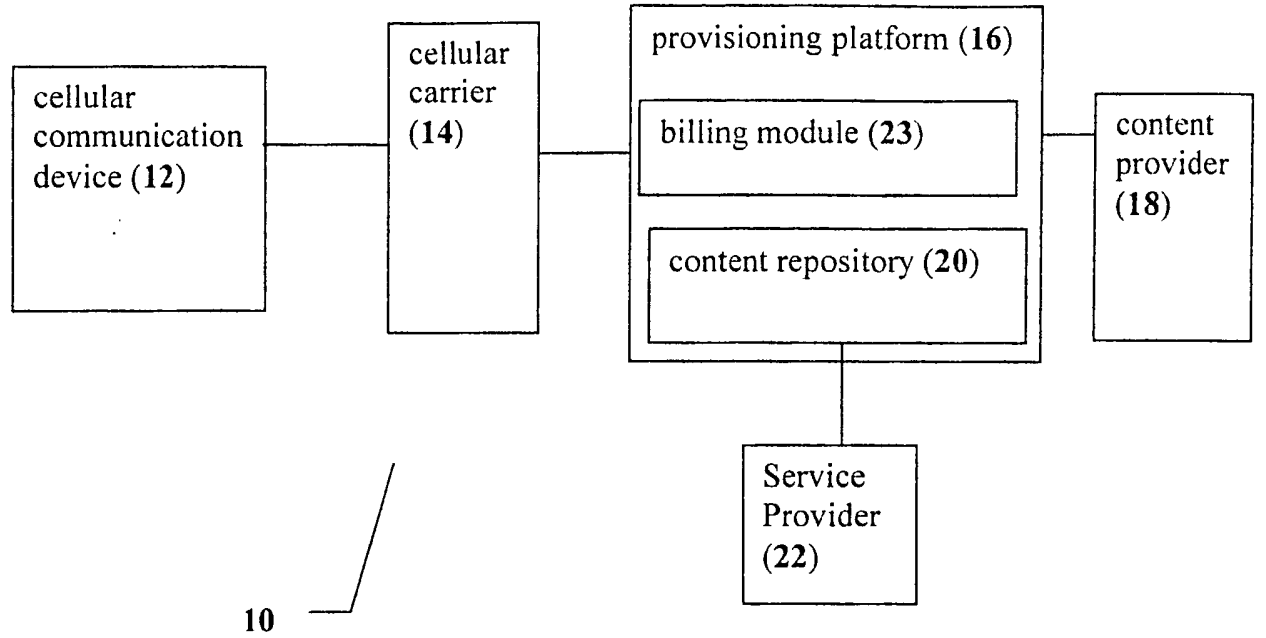
Fig. 1 of EP1747516
Fig. 1 of EP1747516

Here is how the invention is defined in claim 1 of the sole request:

  • Claim 1

Is it technical?

During the proceedings, D3 was considered as the closest prior art. The Board took the view that D3 does not disclose steps (a)(i), (b) and (d) of claim 1:

  • (a) (i) said recognizing comprises identifying a predetermined character string in the instant message as a search trigger
  • (b) causing the search query to be displayed to the first user inline in an IM window on the first client computer and to the second user inline in a second IM window on a second client computer of the second user
  • (d) automatically causing at least one of the search results to be displayed inline in the IM window on the first client computer and inline in the second IM window on the second client computer

The Board found that these steps do not have a synergistic interaction and could therefore be treated separately in the obviousness assessment. For step (a)(i), the problem solved was formulated as how to modify the teaching of document D3 to inform the system explicitly when a search should be performed.

5.3.2 However, the desire to enable users to perform explicitly defined web search queries is not a technical aim but rather a non-technical requirement. Searching for documents using keywords has a non-technical character, and this is not changed by the mere use of a computer system.

Also the appellant’s arguments did not change this assessment:

5.3.7 The appellant further argued that D3 … would have dissuaded a skilled person from using a command-line type mechanism because computer/user interaction schemes had evolved away from command-line interfaces to windowed environments precisely to try to reduce requirements for user effort/action, and this represented a technical prejudice in the relevant art.

However, the desire to add an explicit search query is non-technical and forms part of the problem to be solved. As an explicit search command always involves some input from the user side and as explicit search commands were also well-known in windowed environments, the appellant’s arguments are not persuasive.

For steps (b) and (d), the appellant argued that they had the technical effect of improving user ergonomics. Step (d) of claim 1 improved the visibility of search results for both users by displaying search results in an inline manner, thereby increasing user convenience to enable users to view search results fatigue-free while also continuously keeping track of their conversation. The Board also considered the appellant’s argument that the invention provided an objective physiological reduction in eye and hand movement when providing input:

5.4.2 … That the inline manner of presentation enables users to view search results fatigue-free while also continuously keeping track of their conversation is not convincing as this depends on subjective user preferences (some users may prefer an inline presentation whereas others may not like it) and the information to be presented (e.g. reproducing a retrieved web page inline may not be appropriate as the web page may no longer be readable or occupy so much window space that the messaging context is no longer visible). Hence, the inline manner of presentation does not contribute to the technical character of the invention.

In the end, the Board considered that also steps (b) and (d) do not contribute to the solution of a technical problem. The appeal was thus dismissed and the patent application was finally refused.

More information

You can read the whole decision here: T 0543/18 (Internet search from an instant messaging application/OATH) of 9.5.2019.

Stay in the loop

Never miss a beat by subscribing to the email newsletter. Please see our Privacy Policy.

Privacy policy
* = Required field

EUROPEAN SOFTWARE PATENTS July 2019 updates

July came with four new decisions in the EUROPEAN SOFTWARE PATENTS knowledge base relating to graphical user interfaces, computer security, business methods and internal control:

Patents for graphical user interfaces

Improvements in graphical user interfaces are sometimes difficult to protect with patents when they are closely related to the presentation of information (which is as such excluded from patentability).

In one case, the European Patent Office refused to grant a software patent on a method of unlocking a device by performing gestures on an unlock image. The decisive argument was that giving visual indications about conditions prevailing in an apparatus or system can only be considered a technical problem if these are technical conditions. However, providing reassuring feedback – i.e. a confirmation that the user has been doing the right thing so far – was not in itself considered a technical effect.

Patentability of computer security concepts

In the field of computer security, the European Patent Office refused to grant a software patent on a method of managing booting of secure devices with untrusted software. The decision was appealed successfully and the case was remitted to the Examining Division because erasing user data outside of the security block before allowing the execution of an unsigned operating system was found to contribute to increasing the security of the claimed device.

By the way, if you are interested in a deeper look into how the European Patent Office examines software-related inventions, this 30-minute video gives a concise overview of the “two hurdle” approach with lots of examples.

Business method patents

In the field of business methods, one Technical Board of Appeal decided that an improved risk-hedging approach in credit derivative trading is non-technical. In particular, associating information with trade related data (namely trader, credit risk positions, maturity dates, delta offsets) was found not to be technical. Storage, selection, transmission and processing of such data was considered not produce a further technical effect.

Internal control

In one recent decision, the European Patent Office confirmed that the concept of allowing a computer to access a data library without reconfiguration is technical. However, the board refused to grant a software patent because the claimed solution was found to be obvious.

Fear of missing out?

Stay in the loop

Never miss a beat by subscribing to the email newsletter. Please see our Privacy Policy.

Privacy policy
* = Required field

Improved risk-hedging in credit derivative trading: non-technical

This decision is a good reminder that the European Patent Office does not grant software patents on purely financial concepts. The Board of Appeal in this case decided that an improved risk-hedging approach in credit derivative trading is non-technical. Here are the practical takeaways of the decision T 1895/13 (Reducing delta values of credit risk positions/CREDITEX) of 17.1.2019 of Technical Board of Appeal 3.5.01:

Key takeaways

Associating information with trade related data (namely trader, credit risk positions, maturity dates, delta offsets) is not technical. Storage, selection, transmission and processing of such data does not produce a further technical effect.

Providing for an improved risk-hedging approach in credit derivative trading (e.g. reducing or eliminating individual delta values, optimisation using notional amounts of original trades etc.) does not have technical implications for the functioning of the data processing system.

An unspecified data format per se does not contribute to the technical character. The organisation of data in the form of a table or a spreadsheet is commonly known in the art.

The invention

This European patent application relates to electronic trading systems such as the Creditex RealTime® platform. According to the description, traders or dealers representing large financial institutions (e.g., banks and funds) routinely use electronic trading systems to enter into credit derivative transactions involving large notional amounts.

However, while being delta neutral overall (i.e., with respect to parallel shifts in the entire credit curve of a particular reference entity), a financial institution may still be exposed to short/long credit risk positions in successive maturities on the credit curve. That is, although all the positive and negative delta values may offset one another and thus add up to almost zero, the large variance of the delta positions could be problematic to the bank holding these credit positions. In addition, the bank may be exposed to default gap risk if the delta values toggles between short and long positions too quickly in successive maturities.

Against this background, the application attempts to overcome the problems associated with current risk-hedging techniques in credit derivative trading by providing techniques for reducing delta values of credit risk positions in online trading of credit derivatives.

Fig. 1 of EP 2 212 850

Here is how the invention is defined in claim 1:

  • Claim 1

Is it technical?

Applying the established “two hurdle” approach, the board first noted that the invention as claimed was not excluded from patentability due to the presence of technical means in the claim:

The claim is directed to a mix of technical and non-technical features. The Board does not dispute that the system according to claim 1 appears in a technical context. The system involves technical means such as a processor, a user interface and a communication network and, therefore, has technical character. Accordingly, the claimed subject-matter is an invention in the sense of Article 52(1) EPC (see T 258/03 “Auction method/HITACHI“).

However, as the avid reader will already know, the second hurdle of inventive step can be overcome only based on non-obvious technical features:

However, the question of inventive step requires an assessment of whether the invention makes a technical contribution over the prior art. Features which do not make such a contribution cannot support the presence of an inventive step (see T 641/00 “Two identities/COMVIK“, Headnote I).

In the present case, most of the features of claim 1 were found to not to contribute to the technical character of the invention, namely:

The Board agrees with the contested decision at point 3.3 that the following features “per se” pertain to an administrative business related method, i.e. to the non-technical part of claim 1:

– receiving, in the online trading system of credit derivatives, a plurality of credit risk positions submitted by a plurality of trader clients, each credit risk position having a delta value and a maturity date, wherein each trader client’s submission is unknown to other trader clients;

– automatically identifying, from the plurality of trader clients, at least two trader clients who hold offsetting credit risk positions on at least two maturity dates;

– determining delta offsets to be applied to delta values of the credit risk positions held by the at least two trader clients and having the at least two maturity dates, such that an overall delta of each of the at least two trader clients’ credit risk positions remains substantially unchanged after the application of the delta offsets;

– calculating, based on the determined delta offsets, notional amounts of credit derivative trades needed to realize the delta offsets; and

– executing the credit derivative trades among the at least two trader clients.

Here is how the board argued about these features:

The contribution of the invention does not lie in a faster and more efficient information processing as argued by the appellant (see point 1 of the statement setting out the grounds of appeal). The technical infrastructure and the user interface used according to claim 1 are that of a general purpose computer which was notorious knowledge before the priority date (see for example US 2006/0036535 A1 (D1) cited in the International Search Report: figures 1, 5A, 5B, 6 and 7; para. [0036] to [0041]).

The contribution lies rather in the way of associating information with trade related data (namely trader, credit risk positions, maturity dates, delta offsets). Such data, however, in the Board’s view, is not technical, since it is cognitive data, not functional data (see T 1194/97 Data structure product/PHILIPS, OJ EPO 2000, 525). Storage, selection, transmission and processing of such data are merely implementations of administrative measures following a financial concept, such as would be performed by a human trader, when mitigating credit risk positions, making use of general purpose computer functions (e.g. storing and retrieving information in electronic form) without creating a further technical effect.

The present invention may provide for an improved risk-hedging approach in credit derivative trading (e.g. reducing or eliminating individual delta values, optimisation using notional amounts of original trades etc.) and therefore an improved financial concept. Those measures, however, do not appear to have any technical implication for the functioning of the data processing system and its interactive graphical user interface (GUI), since the underlying operations are carried out by a conventional networked data processing system (such as exemplified in D1, see above).

By the way, if you are interested in a deeper look into how the European Patent Office examines software-related inventions, this 30-minute video gives a concise overview of the “two hurdle” approach with lots of examples:

The applicant had also argued that it was a technical feature of the invention that each client’s submission is unknown to the other trader clients. However, without success:

In contrast to the appellant, the Board does not consider the feature that each client’s submission is unknown to the other trader clients to be technical since such a limitation of data flow is not achieved by technical measures, but is a constraint of the underlying administrative/financial concept.

The same applied ultimately to the aspect of automating the processing of the financial data. As the skilled reader will know, the mere automation of something is regularly considered obvious by the European Patent Office:

The fact that the steps of receiving, identifying, selecting and calculating complementary offsetting credit risk positions are performed automatically and are scalable is an obvious consequence of using a computer system with commonly known database and network technology.

Therefore, the board decided that claim 1 of the main request did not involve an inventive step.

The applicant also tried an auxiliary request which defined that the credit risk positions can be uploaded by the trader clients using a spreadsheet format:

Claim 1 of this request additionally incorporates features of dependent claims 2 and 3 of the main request by further specifying that the plurality of trader clients are invited to upload the plurality of credit risk positions to the electronic trading system of credit derivatives in a spreadsheet format.

The Board concurs with the contested decision that an unspecified data format per se does not contribute to the technical character of the claim and that organisation of data in the form of a table or a spreadsheet was commonly known in the art (see point 8 of the decision under appeal).

In addition, a trading system comprising a standardized interface that allows processing of credit derivatives in a compact and uniform format was known in the art, including the use of tables (see e.g. D1, para. [0013], [0045] or [0046], [0069] to [0071] with figures 11, 14, and 15A to 15D).

The additional features therefore do not involve an inventive technical contribution.

More information

You can read the whole decision here: T 1895/13 (Reducing delta values of credit risk positions/CREDITEX)

Stay in the loop

Never miss a beat by subscribing to the email newsletter. Please see our Privacy Policy.

Privacy policy
* = Required field

Allowing a computer to access a data library without reconfiguration: technical

In this recent decision, the European Patent Office confirmed that the concept of allowing a computer to access a data library without reconfiguration is technical. However, the deciding board refused to grant a software patent because the claimed solution was found to be obvious. Here are the practical takeaways of the decision T 1180/13 (Partitioned data library III/HEWLETT PACKARD) of 25.4.2019 of Technical Board of Appeal 3.5.05:

Key takeaways

Allowing a computer to access a data library without reconfiguration is technical.

The invention

This European patent application relates to a partitioned data library that is to be attached to a data storage area network. To allow existing software to access the partitions without first being reconfigured, the partitions are set up to emulate existing data libraries for which the software has already been configured.

Fig. 1 of EP 1 324 185 A2

Here is how the invention is defined in claim 1 of the main request:

  • Claim 1 (main request)

Is it technical?

Since claim 1 of the main request was found to contain added subject-matter, the board decided on inventive step only with regard to the first auxiliary request. Claim 1 of the first auxiliary request is directed to a data library adapted to be attached to a storage area network. The library contains a number of partitions, each partition including at least one data transfer element and at least one data storage element slot. The partitions share at least one media transport element for moving media between slots and data transfer elements. The library includes a library controller that restricts movement of media between slots to slots assigned to the same partition.

Each of the data transfer elements, data storage element slots and media transport elements is assigned an “internally unique element address”. The library controller assigns a different “logical unit designation” to each partition and an “external element address” to each of the data transfer elements, data storage element slots and media transport elements.

Regarding inventive step, the board held that the invention differed from the closest prior art in the following features:

  • internally unique element addresses are assigned to the data transfer elements, the data storage element slots and the media transport elements;
  • external element addresses are assigned to the data transfer elements and the data storage element slots;
  • the library controller maps the internally unique element addresses to the external addresses; and
  • for each partition, the number of data transfer elements, the number of data storage element slots and the external addresses correspond to the respective numbers and element addresses of an existing data library model from a plurality of existing library models.

The board had no doubt that these features indeed provide a technical effect and thus formulated the objective technical problem as follows:

These features have the effect that a computer configured to access a data library of the existing data library model need not be reconfigured to access the claimed data library.

The problem to be solved may therefore be formulated as how to modify the data library of document D4 so as to allow a computer to access the data library without reconfiguration.

In the end, however, the claimed solution to this problem was found to be obvious:

The skilled person, starting from document D4 and faced with this problem, would consult document D2, which discloses a data library that has a virtual configuration different from its physical configuration and is presented to host computer systems as a conventional data library with a physical configuration identical to the virtual configuration (see abstract). Document D2 explains that this avoids “complicating the set-up, maintenance, or creation of application software utilizing the library” (column 9, lines 30 to 40).

To achieve this goal, the library’s response to host commands must be altered (column 9, lines 44 to 49). In particular, to correctly deal with a SCSI move medium command as shown in Figure 10, the library’s controller has to “remap source and destination addresses from the virtual configuration seen by the host to the appropriate physical resources allocated to that host” (column 9, lines 58 to 62; column 7, lines 10 to 25).

In other words, the library controller maps external element addresses corresponding to the configuration of the “conventional data library” to the internally unique addresses corresponding to the actual physical configuration of the data library (and vice versa). And it is self-evident that for the virtual configuration to correspond to the physical configuration of a conventional data library, the virtual configuration needs to define the same number of data transfer elements and data storage element slots.

Hence, document D2 discloses a SCSI-based solution to the problem posed which is applicable to the SCSI-based data library of document D4 and corresponds to the solution proposed in claim 1. The skilled person would therefore apply the teaching of document D2 to the data library of document D4 and thereby arrive at the subject-matter of claim 1 without the exercise of inventive skill.

Therefore, the board decided that claim 1 of the first auxiliary request does not involve an inventive step.

More information

You can read the whole decision here: T 1180/13 (Partitioned data library III/HEWLETT PACKARD) of 25.4.2019

Stay in the loop

Never miss a beat by subscribing to the email newsletter. Please see our Privacy Policy.

Privacy policy
* = Required field

Managing booting of secure devices with untrusted software: technical

The European Patent Office refused to grant a software patent on a method of managing booting of secure devices with untrusted software. The decision was appealed successfully and the case was remitted to the Examining Division. Here are the practical takeaways of the decision T 1563/17 (Booting untrusted software) of 7.5.2019:

Key takeaways

Erasing user data outside of the security block before allowing the execution of an unsigned operating system contributes to increasing the security of the claimed device.

The invention

This European patent application considers the situation in which a “third party” or “contract manufacturer” manufactures a computing device on behalf of an OEM. In the eventually delivered product, only trusted operating systems should be executed; trust may be established with cryptography. During manufacture, however, it may be convenient to allow the execution of operating systems which are unsigned or only signed by an entity not trusted by the OEM.

To deal with this situation, the invention proposes to provide the device with two modes: “factory mode” and “product mode” (see figure 2).

Fig. 2 of EP2487618A2

In product mode, only “secure boots” are allowed. In factory mode, a limited number of “insecure boots” is allowed during which the access to a “security block” is disabled. The security block is disclosed as containing, inter alia, device-specific cryptographic keys or “user-specific data”.

Here is how the invention is defined in claim 1 of the sole request:

  • Claim 1

Is it technical?

When assessing inventive step, the Board found that having two “modes” of operation in which two security policies apply is non-technical:

7. Having two “modes” of operation (see feature (ii)) in which two security policies apply is the direct consequence of a non-technical requirement. Starting from D1, the invention would have to be viewed as the provision of a “product mode” as opposed to a (suitably modified) “factory mode” as disclosed in D1.

However, the Board found that to validate a cryptographic signature of the OEM before execution is technical.

8. The application starts from the situation in which a device manufacturer has to execute software provided by an OEM during manufacture and, for security reasons, to validate a cryptographic signature of the OEM before execution. …

8.2 A device manufacturer would naturally experience the inconvenience of having to obtain an OEM signature for any software to be executed and would want to have this requirement relieved at least during manufacture­­. The OEM would then address the objective technical problem of providing a more lenient security policy to the manufacturer without unnecessarily compromising security.

After a detailed comparison between all the features of claim 1 and D1, the Board found the following feature technical and inventive:

  • (v) “user data not stored in or protected by the security block” is erased along with the disabling of the access to the security block.

The reasons are:

8.6 D1 does not disclose an explicit step of erasing user data that happens not to be stored in the security block – or rather, the security environment of D1, for that matter (see feature (v)).

8.7 Erasing user data outside of the security block before allowing the execution of an unsigned operating system contributes to increasing the security of the claimed device in a way not suggested by D1 or any of documents D2 to D4.

Therefore, the subject-matter of claim 1 was found to involve an inventive step.

More information

You can read the whole decision here: T 1563/17 (Booting untrusted software) of 7.5.2019.

EUROPEAN SOFTWARE PATENTS June 2019 updates

June came with four new decisions in the EUROPEAN SOFTWARE PATENTS knowledge base relating to graphical user interfaces, computer simulations and business methods:

Patents for graphical user interfaces

Improvements in graphical user interfaces are sometimes difficult to protect with patents when they are closely related to the presentation of information (which is as such excluded from patentability).

In one case, the European Patent Office acknowledged that precomputing user habit information for a graphical user interface of a mobile device is technical. However, this difference over the prior art was found to be obvious, since in the art of computing, “precomputation” was found to be a well known method of speeding up program execution.

On the other hand, the European Patent Office granted a software patent on a method of representing missed approach information in a perspective view on a cockpit display. Here, the argument was that enabling a pilot to abort a landing in due time if necessary, thereby improving safety, is technical.

Patentability of computer simulations

The field of computer simulations continues to be an exciting area in terms of patentability, last but not least because of the pending referral G1/19 in which the EPO Enlarged Board of Appeal will have to make a stance concerning the patentability of computer-implemented simulation methods.

In the meantime, the European Patent Office granted a software patent on a method for designing an optical system that satisfies a certain algebraic condition. The board took the view that the criteria for technical character presupposes that the claimed subject-matter relates to a physical entity or a physical activity.

By the way, if you are interested in a deeper look into how the European Patent Office examines software-related inventions, this 30-minute video gives a concise overview of the “two hurdle” approach with lots of examples.

Business method patents

In the field of business methods, one Technical Board of Appeal had to deal with a patent application relating to an automated exchange system designed to execute matching of combinations of financial instruments. Despite the focus of this invention on a financial use case, the board found that implementing the financial matching concept in a way which improves real-time and latency constraints in the matching unit is indeed a technical problem that has to be taken into account in the inventive step assessment.

Fear of missing out?

Stay in the loop

Never miss a beat by subscribing to the email newsletter. Please see our Privacy Policy.

Privacy policy
* = Required field

Unlocking a device by performing gestures on an unlock image: non-technical

The European Patent Office refused to grant a software patent on a method of unlocking a device by performing gestures on an unlock image. Here are the practical takeaways of the decision T 2630/17 (Feedback on gesture input/APPLE) of 28.5.2019:

Key takeaways

Giving visual indications about conditions prevailing in an apparatus or system can only be considered a technical problem if these are technical conditions.

Not every internal state variable in a running computer can be considered a “technical condition” prevailing in the computer. The display of an internal state variable of a running computer program cannot, by itself, establish that a technical problem is solved.

Providing reassuring feedback – i.e. a confirmation that the user has been doing the right thing so far – is not in itself a technical effect.

The invention

This European patent application relates to a gesture-based procedure for unlocking the touch screen of a portable computing device such as a mobile phone – or, more generally for “transitioning […] between” first and second “user interface states” – and to providing visual feedback for supporting the user in the process.

A typical interface according to the invention is depicted below. To unlock the device, the user “drags” an “unlock image” (402) along a predefined path (404). This mechanism has become known as “slide-to-unlock”.

Fig. 4A of EP3435213A1

It is proposed to give “sensory feedback of the progress” of the required gesture by “transitio­ning an optical intensity of one or more user interface objects associated with the second user interface”. The “optical intensity of a user-inter­face object” is said to be “the object’s degree of visu­al materialization” in a broad sense, subsuming transparency or brightness effects or other means of “visual diffe­ren­tiation”.

Here is how the invention is defined in claim 1 of the main request:

  • Claim 1 (main request)

Is it patentable ?

For assessing the inventive step, the Board found features in the main request that are not disclosed or suggested by the prior art:

6.8 The board … concludes that neither D8 nor D6 discloses or suggests that a user interface element appears at the start of the gesture input and increases in optical intensity to provide “feedback” about its progress.

It remains to be assessed whether the difference features solve a technical problem or, instead, merely “refer[] to an aim to be achieved in a non-technical field” (see, in particular, T 641/00, headnote 2). In the latter case, the difference features would not support an inventive step (see T 641/00, headnote 1), even if they happened to be non-obvious over the prior art.

The Board assessed the above difference features do not have a technical effect:

10. In the present case, the board considers gesture input on a touch screen to be a technical process, in that it implies the tracking of the user’s finger position to identify a gesture and the comparison of that gesture with a required, reference gesture.

10.1 The board also accepts that the claimed graphical user interface provides a form of “feedback” about a “continued […] human-machine interaction process” but considers that this feedback does not guide the user or, more importantly, assist the user in inputting the gesture correctly. The feedback does not, for instance, indicate an error between the gesture being input and the reference gesture.

10.2 According to the claimed invention, users are merely continuously informed as to whether they have input the required gesture correctly so far. That is, as long as they observe a change in optical intensity while gesturing they will understand that the partial gesture input so far has been correct.

10.3 This may reassure (inexperienced) users about what they are doing but does not help them decide what to do next. The board considers that providing reassuring feedback – i.e. a confirmation that the user has been doing the right thing so far – is not in itself a technical effect. For illustration, the board notes that a user who knows the required gesture, in particular if it is a short, simple swipe as required by D8, may decide to ignore the graphical feedback altogether without any loss in input precision or speed. In other words, the user need not heed the feedback in order to successfully enter the required gesture.

Therefore, the board held that the characterising GUI features do not solve a technical problem. In the end, the appeal was dismissed and the European patent application was rejected for lacking an inventive step over the prior art.

More information

You can read the whole decision here: T 2630/17 (Feedback on gesture input/APPLE) of 28.5.2019.

Stay in the loop

Never miss a beat by subscribing to the email newsletter. Please see our Privacy Policy.

Privacy policy
* = Required field

Matching unit comprising two computer entities directly connected to a shared memory storing pre-calculated values: technical

The European Patent Office considered a matching unit comprising two computer entities directly connected to a shared memory storing pre-calculated values technical. Here are the practical takeaways from the decision T 1072/11 (Matching unit comprising two computer entities directly connected to a shared memory storing pre-calculated values/NASDAQ) of 18.6.2019 of Technical Board of Appeal 3.5.01:

Key takeaways

Using known computer processors and memory for special tasks may be considered as “non-notorious”. Thus, prior art has to be considered for assessing inventive step.

The invention

The invention underlying the present decision relates to an automated exchange system designed to execute matching of combinations of financial instruments. According to the application, in many electronic exchange systems today it is possible to trade so-called combination orders implying the trade of two or more contracts. Such a contract may be set up as a separate instrument. Oftentimes, the ratio between the elements to be sold and bought of such a contract cannot be expressed by natural numbers. In an automated exchange system, the bottleneck is the matching unit used for calculating the ratios which results in a very high workload on the underlying computer processor. That is the reason why presently no system performs such calculations. Hence, the goal of the application is to provide a system and method that is able to use formulas to derive the volume and/or price of a combination order to reduce the risk for the party entering such a transaction.

Fig. 1 of WO 03/105044 A2

  • Claim 1 (main request)

Is it patentable?

The EPO’S first instance examining division rejected the present application due to lack of inventive step in view of D1 (US 6098051 A1), a publication introduced during the examination proceedings with the summons for oral proceedings before the first instance. However, the Board in charge does not agree to this assessment. At first, the Board outlined that the claimed subject-matter refers to a mixed-type invention and thus provides technical character:

2.1 The independent claims are directed to a mix of technical and non-technical features. The Board does not dispute that they appear in a technical context. Even the method can be considered to be performed by technical means, because it involves a first and second computer processor as well as a memory, i.e. means for processing and storing data and, therefore, has technical character. Accordingly, the claimed subject-matter is an invention in the sense of Article 52(1) EPC (see T 258/03 “Auction method/HITACHI“).

Then, the Board identified several differences over D1 and formulated a technical problem as follows:

2.5 D1 does not disclose the following features of claim 1:

– the second entity is located within the matching unit,

– a calculation of matching data values required in the matching process by the second computer entity,

– a shared memory directly connected to the second computer entity and- storing calculated matching data values calculated by the second computer entity in the shared memory.

2.6 The underlying objective technical problem is considered to be to implement the financial matching concept in a way which improves real-time and latency constraints in the matching unit.

Furthermore, according to the Board, it is not notorious to use known processors, co-processors as well as memory in the claimed way:

3. The Board is aware of computer processors comprising a coprocessor as well as first and second level cache memory, which have been used for special tasks already before the priority date of the present application, including improving processing power and dealing with real time constraints. However, the Board is not convinced that this has been notorious knowledge of the skilled person. Therefore a look into the prior art is necessary.

However, the Board outlines that it believes that a further prior art search is required before inventive step can be assessed and thus remitted that case back to the examining division:

3.3 Thus, present claim 1 cannot be definitively assessed for inventive step without knowledge of the relevant documented prior art. Thus, the main request requires a search for relevant prior art. Hence the matter must be remitted for an additional search and further examination.

4. According to Article 111(1) EPC the Board may exercise any power within the competence of the examining division (which was responsible for the decision under appeal) or remit the case to that department for further prosecution. It is thus at the Board’s discretion whether it examines and decides the case or whether it remits the case to the department of first instance. As it appears necessary for a further search to be carried out, the Board considers that in the present case remittal is the more appropriate course of action. […]

More information

You can read the whole decision here: T 1072/11 (Matching unit comprising two computer entities directly connected to a shared memory storing pre-calculated values/NASDAQ) of 18.6.2019.

Stay in the loop

Never miss a beat by subscribing to the email newsletter. Please see our Privacy Policy.

Privacy policy
* = Required field

Designing an optical system with certain mathematical properties: technical

The European Patent Office granted a software patent on a method for designing an optical system that satisfies a certain algebraic condition. Here are the practical takeaways of the decision T 0471/05 of 6.2.2007 of Technical Board of Appeal 3.4.02:

Key takeaways

The criteria for technical character presupposes that the claimed subject-matter relates to a physical entity or a physical activity.

The invention

This European patent application relates to the activity of designing an optical system. This is done such that substantially all light rays imaged by the optical system between two predetermined points on the optical axis of the system satisfy an algebraic condition specified in the patent claim.

Fig. 1 of EP 0 932 845

Here is how the invention is defined in claim 1 of the main request:

  • Claim 1 (main request)

Is it technical?

Since claim 1 concerned a method for designing an optical system essentially such that a mathematical formula is satisfied, the question at hand was whether the claimed subject-matter is excluded from patentability per se. In this respect, the board noted:

Thus, the claim merely formulates a series of mathematical and optical abstract concepts without properly requiring a physical, technical implementation. In particular, neither the claimed design method nor the resulting “design” requires a technical activity or a technical entity – let alone a “physical” activity or entity within the meaning of decision T 453/91 (point 5.2 of the reasons). It follows that the subject-matter for which protection is sought (Article 84 EPC, first sentence) is the mere “design” of an optical system and encompasses purely abstract and conceptual implementations excluded from patent protection pursuant to Articles 52(1), (2) and (3) EPC. More particularly, the claimed method can be carried out as a purely mental act or as a purely mathematical design algorithm and, consequently, encompasses embodiments falling within the category of methods for performing mental acts as such and within the category of mathematical methods as such both expressly excluded from patent protection under Article 52(2)(a) and (c) in conjunction with Article 52(3) EPC.

The appellant argued that the claimed method defines an activity that requires the use of technical means, involves technical considerations, results in an optical system design and produces technical information in the form of the specifications of an optical system having predetermined technical characteristics, and pertains to the technical field of optical design. However, this did not convice the board:

However, this line of argument does not persuade the Board. The criteria for technical character of a claimed invention discussed in decision T 619/02 implicitly presuppose that the claimed subject-matter defining the matter for which protection is sought relates to a physical entity or a physical activity (see for instance point 2.1, first paragraph, and points 2.3.1, 2.4.1 of the decision). It cannot be denied that the method defined in claim 1 of the main request can be carried out using some physical means (e.g. a block of optical material to be gradually shaped into an optical system so as to satisfy the algebraic condition specified in the claim), or using some technical means (e.g. a computer to determine the optical specifications of the optical system design), or in the form of a physical activity that results in a physical entity (e.g. when the claimed step of “making a design of the optical system” is implemented by the manufacture of the design as actually claimed in claim 5), and that such implementations of the claimed method constitute physical, technical activities not excluded from patent protection (see for instance decisions T 914/02, point 2.3.3 of the reasons, and T 258/03, OJ EPO 2004, 575, point 4.7). Nonetheless, contrary to the appellant’s contention, the claimed method does not require the use of technical means and, as noted above, the method is not restricted to physical, technical implementations, and the fact that the claimed method encompasses non-excluded implementations such as those mentioned above does not overcome the fact that the claimed method also encompasses excluded subject-matter (T 914/02, points 2 and 3, and T 388/04, OJ EPO 2007, 16, point 3 of the reasons; see also T 453/91, point 5.2, and T 930/05, points 3.1 and 4.5). Thus, as long as the claimed design method is not confined to physical, technical implementations, the claimed subject-matter encompasses embodiments excluded from patentability under Articles 52(1) to 52(3) EPC and is not entitled to patent protection under the EPC.

Therefore, the board concluded that claim 1 of the main request is excluded from patent protection under Articles 52(1), (2) and (3) EPC.

In a second auxiliary request, the appellant added that the claimed method is carried out “using an optics design program”. This claim version overcame the exclusion:

Thus, claim 1 of the second auxiliary request defines an activity in which the design conditions defined in the claim are input into an optics design program to determine the design parameters of optical systems satisfying the design conditions expressed in the claim. In addition, the determination by the optics design program of the resulting design specifications requires implicitly that the optics design program is run in some form of hardware such as a computer. It follows that the claimed method defines an activity involving inherently and necessarily the use of such hardware fed with the optics design program and the claimed design conditions, i.e. defines a physical, technical activity.

By the way, if you are interested in a deeper look into how the European Patent Office examines software-related inventions, this 30-minute video gives a concise overview of the “two hurdle” approach with lots of examples:

Regarding inventive step, the board was apparently satisfied that the claimed subject-matter, including the mathematical formula, defines technical subject-matter, since it examined in detail whether these features were rendered obvious by the prior art at hand:

The Board, however, cannot follow the conclusion drawn by the examining division. First, the line of argument of the examining division relies on a parameter q algebraically interpolating between the Abbe and the Herschel conditions, i.e. relies on hindsight knowledge of the specific algebraic condition defined in the claimed invention and therefore on an ex post facto analysis. Second, even assuming that the skilled person would have considered the possibility of obtaining a compromise between the two antagonistic conditions different from that proposed in document D1, the Board notes that there is an infinite number of ways of reaching a compromise between the two conditions. In particular, there is an infinite number of mathematical functions interpolating between the two algebraic conditions [1] and [2]; even restricting such interpolating functions to parametric functions, there is an infinite number of such interpolating parametric functions, the one-parameter algebraic interpolations given by the appellant in the statement of grounds of appeal (see point V above) constituting just some examples. In fact, there are even infinite ways of compromising the two conditions with the algebraic function defined in the claim when – contrary to the requirements of the claimed design – the condition is only satisfied by some light rays, or by substantially all light rays but with different values of the parameter q.

In addition, the algebraic condition defined in the claimed invention does not constitute an arbitrary selection of just one from among infinite possibilities of mathematically interpolating between conditions [1] and [2], but, according to the disclosure of the invention, the claimed condition constitutes the selection of a specific mathematical interpolation that guarantees the achievement of an advantageous balance between field size and axial excursion (page 3, lines 15 to 25), thus allowing for a relatively large volume in image space where aberrations stay relatively low (pages 9 to 12 of the application).

In view of the above, neither the available prior art nor the general common knowledge in this field suggest the design requirements defined in claim 1 and the technical improvements achieved therewith.

Therefore, the Board decided that claim 1 of the second auxiliary request involves an inventive step.

More information

You can read the whole decision here: T 0471/05 of 6.2.2007

Stay in the loop

Never miss a beat by subscribing to the email newsletter. Please see our Privacy Policy.

Privacy policy
* = Required field

Improving information display on a display device of an aircraft: technical

The European Patent Office granted a software patent on a method of representing missed approach information in perspective view on a cockpit display. Here are the practical takeaways of the decision T 0013/18 of 12.4.2019 of Technical Board of Appeal 3.2.01:

Key takeaways

Enabling a pilot to abort a landing in due time if necessary, thereby improving safety: technical

The invention

This European patent application relates to a method for displaying information on a display device of an aircraft. The method comprises determining graphics data for visual aids that represent
missed approach data, incorporating the graphics data into a user interface that is in perspective view, and generating the user interface for display on the display device of the aircraft.

Fig. 3A of EP 2 664 549

Here is how the invention is defined in claim 1 of the main request:

  • Claim 1 (main request)

Is it technical?

The Board found that claim 1 differs from the closest prior art by the step of “determining, by a distance determination module (24), using the approach data (30) based on real-time flight data or prescribed flight data at least one of a time and a distance from the touchdown point where the decision height or the minimum descent altitude would be achieved” (feature c).

According to the Board, this difference solves the following technical problem:

Determining at least the time or distance from the touchdown point where the decision height or the minimum descent altitude would be achieved will enable the pilot to abort the landing in due time if necessary.

The problem to be solved may be regarded as to increase safety landing.

In view of the prior art at hand, there was no hint for the skilled person to come up with the claimed solution:

D1 (col.8, l.33-45, figure 4) discloses the following: “If the aircraft drops below a predetermined altitude, a shadow 63 of the predictor 31 becomes visible on the screen. The shadow 63 gives the pilot information as to the altitude and the predicted altitude without it being necessary to concentrate on another instrument. In connection with the change in the color of the symbols of the predictor 31 in the region of the lower permissible speed, the pilot can at a glance gather all necessary information shortly prior to touchdown”. The information displayed in D1 enables the pilot to correct the landing.

Thus D1 deals with another problem than the one in the present application. It does not enable the pilot to visualise the decision height or the minimum descent altitude to enable him to take a decision on aborting the landing of the plane. Furthermore there is no incentive for the skilled person to change the information displayed in D1 and to determine the time or distance from touchdown where the decision height or the minimum descent altitude would be achieved.

Therefore, the subject-matter of claim 1 was found to involve an inventive step.

More information

You can read the whole decision here: T 0013/18 of 12.4.2019

Stay in the loop

Never miss a beat by subscribing to the email newsletter. Please see our Privacy Policy.

Privacy policy
* = Required field