Author Archive

A central database for recording a status and an archive store for recording the status: technical

The European Patent Office considered a central database for recording a status and an archive store for recording the status technical. Here are the practical takeaways from the decision T 1242/04 (Provision of product-specific data/MAN) of 20.10.2006 of Technical Board of Appeal 3.5.01:

Key takeaways

Databases and archive stores are most likely technical means, whereas the stored data may have no direct technical effect.

Hence, when it comes to assessing inventive step, one has to carefully distinguish between databases and the data stored in it.

The invention

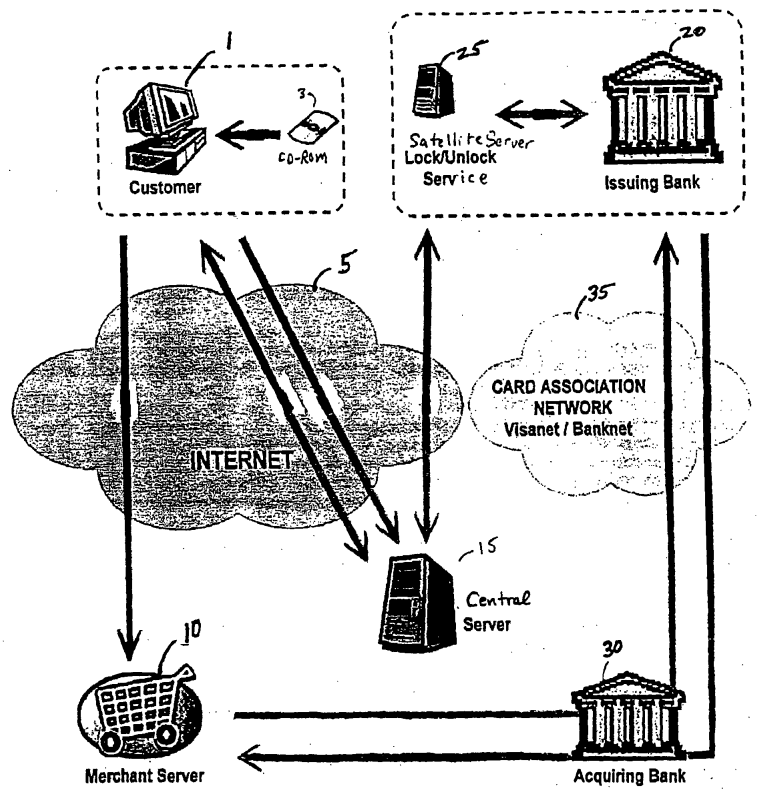
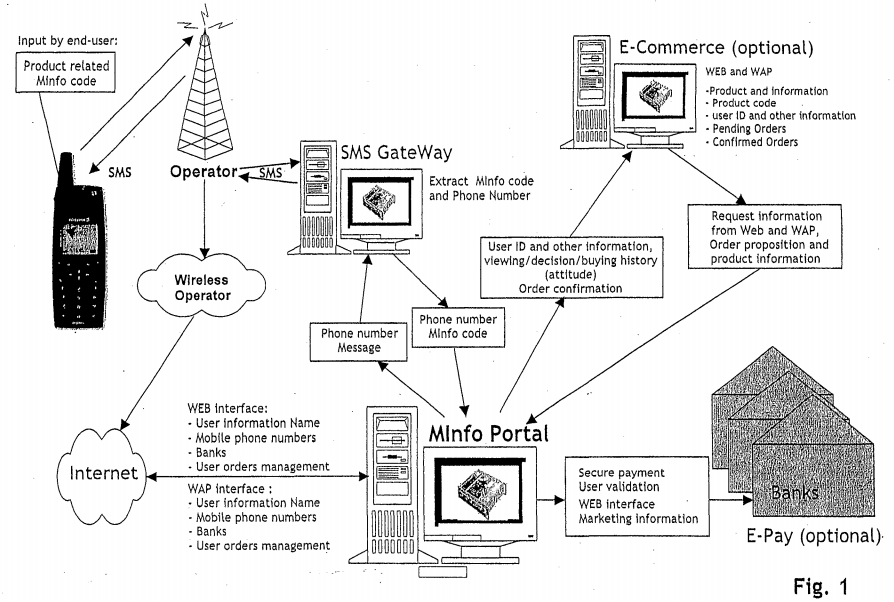
The application underlying the present decision relates to a method and system for providing product-specific data in a service station for detecting and possibly modifying construction and functional conditions of products supplied by a manufacturer. The object of the invention is to provide a process through which the functionality and quality of delivered products can be guaranteed throughout their entire life (cf. EP 1 320 055 A1, paras. [0002] and [0003]). The invention uses a central database to store equipment data for different products, with the equipment data being constantly updated by the manufacturer (cf. EP 1 320 055 A1, paras. [0018]).

Fig. 1 of EP 1 320 055 A1.

  • Claim 10 (main request)

Is it patentable?

The first instance examining division refused searching the claimed subject-matter because it allegedly lacks technical character:

II. (…) The claims relate to subject-matter which is excluded from patentability under Article 52(2) and (3) EPC. Given that they refer either only to such non-technical matter or to commonly known features for their technological implementation, the search examiner has been unable to identify any technical problem whose solution might possibly involve an inventive step. Hence it has not been possible to carry out a meaningful search into the state of the art (…).

Hence, applicant filed an appeal and was able to convince the Board in charge that the claimed subject-matter provides technical character:

3.1 The objection of lack of technical character in the subject-matter of the two independent claims 1 and 10 does not bear scrutiny in the light of the case law of the boards of appeal in T 931/95 (OJ EPO 2001, 441) and T 258/03 (OJ EPO 2004, 575).

3.2 Apart from the fact that, in keeping with T 931/95, even the apparatus category of claim 10 implies the presence of physical features and hence a technical character, both of the independent claims feature at least a central database for recording the required status and an archive store for recording the actual status which communicate with each other by computing means, which implies the use of a computer. Thus independent method claim 1 also uses technical means and in keeping with T 258/03 involves more than a purely abstract concept. Thus independent claims 1 and 10 both have a technical character and constitute inventions within the meaning of Article 52(1) EPC.

With respect to the assessment of inventive step, applicant defined the objective technical problem to be solved as follows:

4.1 The appellant has argued that the object of the invention is to guarantee the product’s functionality and quality throughout its lifetime, and that this constitutes a technical contribution.

However, the Board in charge disagreed:

4.1 (…) In the Board’s view, however, this object is not achieved by the subject-matter of claim 10. Higher functionality and quality throughout the product’s lifetime are not the consequence of the method or system of the invention; they are the consequence of using the best possible components. The stored data itself has no direct technical effect on product quality, this in fact being provided by the improved components themselves, to which the equipment data in the central database merely refers. Hence the guarantee of maintenance quality is also dependent upon the service personnel and is not automatic, which means that errors in maintenance continue to be possible.

4.2 Even if the object is simply held to be the provision of product-specific data so that the product’s required status can be compared with its actual status (see also col. 6, l. 26-28 of the A1 document: “This results in the automatic supply of updated product-specific data to the service station”), it is still essentially administrative in nature. What is definitely technical, though, is the realisation or implementation of this concept by technical means; and that must be held to constitute the technical problem in this case.

Therefore, the Board in charge applied the well-known COMVIK approach for assessing inventive step by only considering the technical features:

4.3 In assessing inventive step, only the features which contribute to the solution of the technical problem need to be taken into account (see T 641/00, OJ EPO 2003, 352). In independent claim 10 these are:

– a central database for storing and providing data

– an archive store for archiving data files retrievable via their assigned identification codes which comprise changes to the specific product in sequential data file versions

user interfaces assigned to service stations and connectable to the archive store by telecommunication for the retrieval of data files, and

– a computer-assisted program which communicates with the central database and the archive store in order to generate new and/or updated data files and store them in the archive store.

However, the Board considered these features to be general knowledge and are thus known in the art:

4.4 In the Board’s view, communication between the central database and the archive store is simply a form of client-server architecture, which was indisputably already part of the common general knowledge before the date of priority of the present application. The sequential data files in the archive store constitute an obvious implementation of a conventional maintenance manual in the form of an electronic database.

Hence, the Board considered the claimed subject-matter as being obvious to the skilled person.

More information

You can read the whole decision here: T 1242/04 (Provision of product-specific data/MAN) of 20.10.2006.

Stay in the loop

Never miss a beat by subscribing to the email newsletter. Please see our Privacy Policy.

Privacy policy
* = Required field

Charging for content consumption: non-technical

The European Patent Office refused to grant a software patent on a method of charging for consuming dynamic content according to rules defined in server-side and client-side policies. Here are the practical takeaways of the decision T 0239/14 of 13.6.2019 of Technical Board of Appeal 3.5.01:

Key takeaways

Providing part of the rules of a billing model at the side of the client, rather than the server, is not of technical relevance.

Licence terms are not technical, since they are cognitive data, not functional data.

The invention

The invention underlying this European patent application concerns charging for consuming (e.g. downloading) dynamic content according to rules defined in a server-side charging policy, and the provision of licence terms in a client-side policy.

Fig. 1 of EP 1 379 983

Here is how the invention is defined in claim 1 (main request):

  • Claim 1 (main request)

Is it technical?

First of all, the board acknowledged that claim 1 includes at least some technical features (a client and a server computer system), so that the invention passes the patent-eligibility hurdle:

The claim is directed to a mix of technical and non-technical features. The Board does not dispute that the method according to claim 1 appears in a technical context. The claimed method can be considered to be performed by technical means, because it involves a client and a server, i.e. inter-related devices with means for storing processing, transmitting, and receiving data. The overall subject-matter of claim 1 therefore, has technical character. Consequently, the claimed subject-matter is an invention in the sense of Article 52(1) EPC (see T 258/03 – Auction method/HITACHI).

But as the skilled reader will know, the presence of an inventive step requires the features distinguishing the invention from the prior art to contribute to the solution of a technical problem:

However, the question of inventive step requires an assessment of whether the invention makes a technical contribution over the prior art. Features, which do not make such a contribution, cannot support the presence of an inventive step (see T 641/00 Two identities/COMVIK, Headnote I). The non-technical features may instead be included in the framework of the technical problem that the skilled person has to solve (Headnote II).

Following the board’s assessment, the only difference over the closest prior art was that the “authorization of said user to consume said content unit is defined via license terms within a client side policy“. According to the board, this is not a technical difference:

The contribution is not a technical one, since it lies in the association of digital content with an authorization for its use/consumption.

What is called “client side policy” and “server-side policy” represents the underlying billing model in a mobile communication client-server environment. By providing part of the rules at the side of the client, rather than the server, they might be available offline (see page 12, lines 24 to 33). However, the Board does not regard this to be of technical relevance. The appellant has not brought forward convincing arguments to the contrary. The Board considers this split of rules between the client and the server to be part of the billing concept, which is provided to the skilled person as a set of requirements to implement. It is not the technically skilled person who comes up with the split in order to solve a technical problem.

The client-side policy defines license terms, i.e. rules specifying what the user can and cannot do with the content. For example, the licence terms could specify a limited period of usage or a limited number of uses (see page 12, lines 27-28 in the published application). In the Board’s view, those are administrative rules, which do not contribute to the solution of a technical problem.

Furthermore, the licence terms are not technical, since they are cognitive data, not functional data in the sense of having a technical effect (for this distinction see T 1194/97 Data structure product/PHILIPS, OJ EPO 2000, 525). The storage, selection, and processing of such cognitive data is an administrative measure, such as would be performed by a human when charging for consumed dynamic content, making use of general purpose computer or mobile communication device functions (e.g. transmitting, receiving, storing and retrieving information and content in electronic form) without creating a further technical effect.

The fact that steps of the claimed method are performed automatically is a mere consequence of implementing the non-technical billing model in a mobile communication client-server environment. Indeed, the automatic processing is already achieved in D1 (see the communications system underlying the MOBIVAS architecture in figure 1). D1 not only discloses the technical infrastructure necessary for implementing the non-technical billing concept, but also a significant part of the billing concept itself (see point 2.3 above).

Therefore, claim 1 was found not to involve an inventive step:

In the absence of any technical contribution beyond the straight-forward computer-implementation, the subject-matter of claim 1 does not involve an inventive step (Article 56 EPC) in view of D1 and the skilled person’s common general knowledge.

More information

You can read the whole decision here: T 0239/14 of 13.6.2019

Stay in the loop

Never miss a beat by subscribing to the email newsletter. Please see our Privacy Policy.

Privacy policy
* = Required field

Authenticating individuals based on liveness probability: non-technical

The European Patent Office refused to grant a patent on a method of authenticating financial transactions based on biometric data. Here are the practical takeaways of the decision T 1386/14 (Fraud resistant biometric financial transaction / EYELOCK LLC) of 12.6.2019 of Technical Board of Appeal 3.4.01:

Key takeaways

The choice of “liveness” as criterion for authenticating an individual is a non-technical decision as to what sort of identification is acceptable.

A prerequisite for the existence of an inventive step is the existence of a technical difference that provides a technical effect.

The invention

This European patent application concerns biometric identification and authentication methods, in particular for authenticating financial transactions using biometrics.

According to the application, one problem faced by biometric recognition systems involves the possibility of spoofing, e.g. when an imposter presents a life-sized, high-resolution photograph of a person to an iris recognition system. To this end, known systems try to determine liveness of the subject to be authenticated, e.g. by shining a light onto the eye and determining whether the pupil dilates. The patent application criticizes that in prior art systems which determine liveness, the liveness test is conducted first, prior to the match process, i.e. the calculation of the probability of a match between acquired biometric data from the individual being authenticated and data acquired from known individuals.

Fig. 2 of EP 2 100 253

Here is how the invention is defined in claim 1 (auxiliary request 4):

  • Claim 1 (auxiliary request 4)

Is it technical?

The board of appeal based its assessment of inventive step on a prior art document which concerned biometric authentication systems:

Document D8 concerns biometric authentication techniques. It focuses on the merits of multibiometric systems, that is, on systems making use of multiple biometric sensors for data acquisition. (…) In one category of multibiometric systems, data are fused together at the decision level, that is, at the end of the decision process. Such a configuration, as described in section “2.2 Fusion at the Matching Score Level” of D8, was considered as closest prior art by the Examining Division in its rejection of auxiliary request 2 (then pending) for lack of inventive step. (…) In view of the fact that multibiometric systems indeed address the problems of reliability and accuracy of matching and further attempt to remedy the problems of spoofing identified with regard to previous techniques (cf. D8, section “Introduction”, first paragraph), the selection of D8 as starting point is justified.

First of all, the board criticized the first instance examining division for failing to apply the proper problem-solution approach:

Although details are lacking, it seems that the Examining Division meant that it would have been obvious either to replace one of the sensors of Figure 3 in D8 by a sensor indicative of “liveness” or to add such a sensor.

The Examining Division defined neither the objective technical problem solved by the claimed invention, nor the technical features distinguishing the claimed subject-matter from D8.

Both are, however, essential in the problem – solution approach. A prerequisite for the existence of an inventive step is the existence of a technical difference that provides a technical effect.

Concerning inventive step, the board took the view that the feature of calculating a probability of “liveness” is a non-technical criterion which thus cannot establish non-obviousness:

The method according to claim 1 of the fourth auxiliary request differs from the method of D8 in that it calculates a probability of “liveness”, that is, a probability that biometric data have been “acquired from a live human”. (This construes the unclear wording in claim 1, in the appellant’s favour, as reflecting the teaching of paragraph [0012] of the published application). The choice of “liveness” as criterion is a non-technical decision as to what sort of identification is acceptable. The combination of probabilities, itself, is a mathematical operation and does not contribute to the technical character of the claimed method, at least insofar as it is construed as referring to mere calculations carried out on the available biometric data. The Board notes that the claim is not concerned with the technical means by which “liveness” is measured, but only with the fact that it is “liveness”.

The same conclusion would apply to the system of independent claim 14, which requires a corresponding calculating means for calculating the probability of “liveness”. Since the system of D8 also comprises calculating means, the contribution is limited to the calculation being carried out, as such.

A consequence of the previous analysis is that no distinction of a technical nature can be identified between the claimed inventions and the disclosure of D8 (cf. T 119/11, for example).

For these reasons, the board concluded that claim 1 does not involve an inventive step.

More information

You can read the whole decision here: T 1386/14 (Fraud resistant biometric financial transaction / EYELOCK LLC) of 12.6.2019

Stay in the loop

Never miss a beat by subscribing to the email newsletter. Please see our Privacy Policy.

Privacy policy
* = Required field

Using a NoSQL data store and an RDBMS to provide performance improvement in a database system: technical

The European Patent Office considered using a NoSQL data store and an RDBMS to provide performance improvement in a database system technical. Here are the practical takeaways from the decision T 1924/17 (Data consistency management/ACCENTURE GLOBAL SERVICES) of 29.7.2019 of Technical Board of Appeal 3.5.07:

Key takeaways

Mathematical methods applied to solve a technical problem are patent eligible.

Particularly, improving response times for queries by automatically using different data stores, relational database management systems and NoSQL data stores, to manage data tables contributes to the technical character of an invention.

The invention

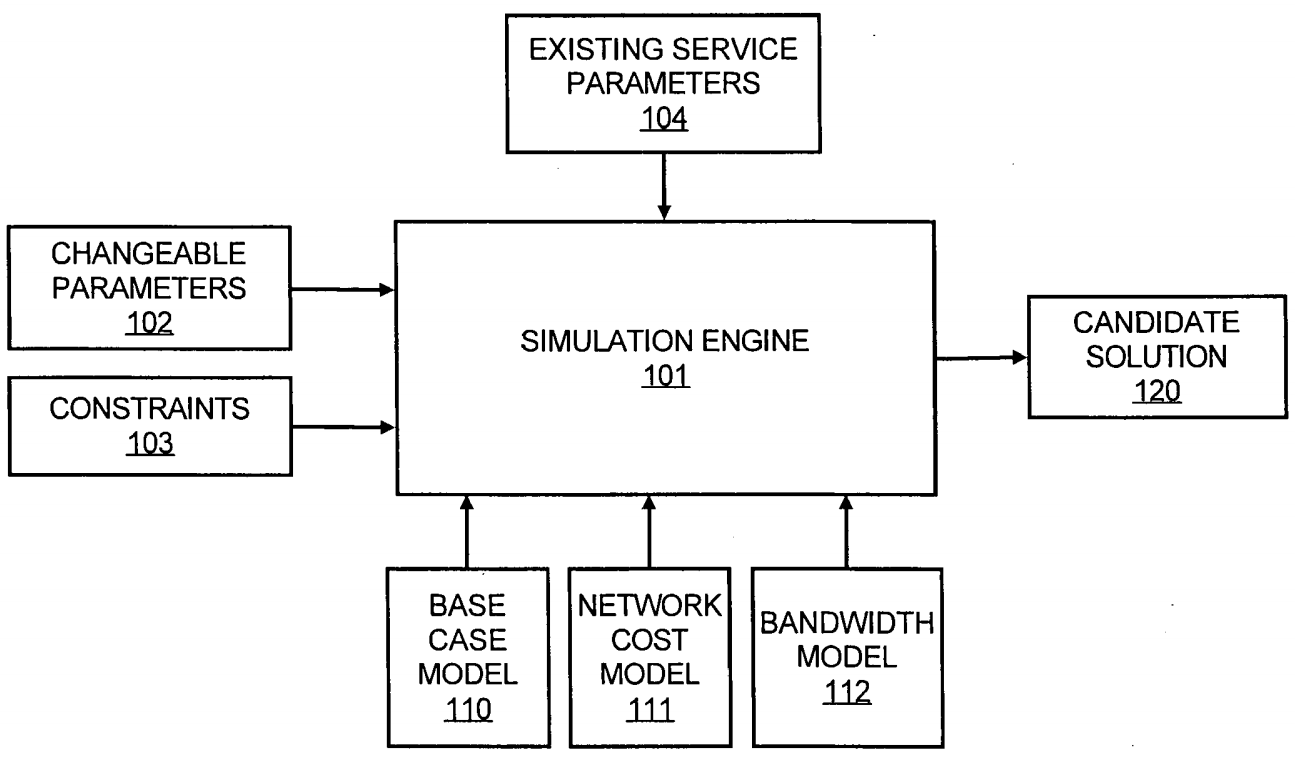
The application underlying the present decision relates to data consistency management and aims at achieving scaling using cloud computing for applications relying on a relational database as the data tier to provide transaction support and to ensure data consistency (EP 2 735 979 A2, para. [0001]). The purpose of the invention is explained by the Board in charge as follows:

2. (…) The invention proposes an automated approach for determining the trade-off between data consistency and scalability, thus accelerating the process of augmenting the data tier with NoSQL data stores for scalability in the cloud (paragraph [0027]). The invention monitors database queries issued by an application, and identifies data tables with query patterns that are most suitable to be managed by a NoSQL data store (paragraph [0027]). Based on a determination that a certain data table may be managed by a NoSQL data store, the  invention creates data structures in the NoSQL data store according to the data schema of the table, and translates SQL queries to the data table into corresponding NoSQL application programming interface calls (paragraph [0027]). For example, the invention may identify queries that select data from a single table using the primary key for this table. Such queries may be supported by key-value stores, which are NoSQL data stores, with high performance. As a further example, the invention may identify select queries aggregating a single column of a table. For such queries a column store may be suitable (paragraph [0047]).

A data table ranking module of the invention ranks data tables with a linear combination of the percentage of read queries and the percentage of query patterns suitable for a NoSQL data store (paragraph [0038]). A data table determination module automatically determines which data table can tolerate data inconsistency from the ranked data tables, and thus can be managed using a NoSQL data store (paragraph [0041]).

Fig. 1 of EP 2 735 979 A2

  • Claim 1 (main request)

Is it patentable?

In its decision to reject the application, the first instance examining division argued that only the following features of claim 1 of the main request are technical: a system, a data store, a database
management system, a memory and a processor. All other features would only constitute a number of abstract procedural steps in terms of a computer program as such. Consequently, only the above-listed technical features were considered by the examining division for assessing inventive step. As a result, the examining division decided that the claimed-subject-matter is rendered-obvious by the closest prior art document D1 because D1 discloses all of the technical features listed above. To substantiate this decision, the examining division outlined that features may only contribute to the technical character of an invention if they provide a “further” technical effect:

6. (…) The Division considered that features of a computer program may contribute to the technical character of the invention if they were capable of bringing about a “further” technical effect, when being executed, or involved “further” technical considerations. It referred to the Guidelines for Examination, G-II, 3.6. In the system according to claim 1, the effect of the procedural steps was to achieve different execution times and data consistency levels. These effects, however, were not “further” technical effects. Achieving data consistency levels was a “human requirement”, as there was “no technical reason for keeping data consistent versus partially or totally inconsistent”. Hence, data consistency was part of the requirements specification. Achieving different execution times was “an inherent side effect of the (any) different computer programming” and, therefore, “not sufficient on its own to qualify as a technical effect”.

Particularly features like “key-value store” and “column store” were considered as data structures which could not contribute to inventive step:

6. Features like “key-value store” and “column store” were “data structures” and, hence, merely static memory configurations not contributing to the technical character of the invention (see point 3.2 of the contested decision).

Importantly, the Board in charge did not agree with the examining division’s identification of technical and non-technical features in claim 1. With respect to the features of “key-value store” and “column store”, the Board pointed to paragraphs [0019] and [0032] of the application as filed in which such data stores are correctly described as systems:

9. (…) As correctly stated in the application, paragraphs [0019] and [0032], NoSQL data stores including keyvalue stores and column stores are non-relational database management systems. A database management system is not a data structure, but a software system for storing, retrieving and processing data which typically uses various data structures for the efficient management of data. Hence, these systems are not merely static memory configurations, they implement methods operating on the data and the data structures to query the data, for example. Thus, the reasoning of the contested decision is not convincing.

Moreover, the Examining Division identified database management systems as being technical, but considered the features specific for relational database management systems to be non-technical. As the technical function of a database management system is, at least to a substantial part, determined by the data model supported by the system (e.g. the relational model of data), the Board sees no reason why relational database management systems should be non-technical, if it is accepted that database management systems in general are technical. (…)

Notably, in order to assess the issue whether and to which extent claim 1 contributes to the solution of a technical problem, the Board in charge reviewed a plurality of decisions of the boards of appeal in the field of information systems. A first group of reviewed decisions concerns inventions related to accessing data in database management systems and, in particular, the processing of structured queries for this purpose, whereas a second group of decisions relates to the field of information retrieval. The decisions of both groups are briefly summarized in the following:

First group (accessing data base management systems):

11.1 In decision T 1242/04 (OJ EPO 2007, 421), the invention according to claim 10 related to a system for providing product-specific data in a service station. (…) Hence, this decision identified not only the central database for storing and providing data as a feature contributing to the solution of a technical problem (in combination with the other listed features), but also the computer program communicating with this central database and an archive store.

11.2 Decision T 279/05 of 5 October 2007 concerned an invention related to determining airline seat availability. The invention involved a mixture of technical aspects, e.g. servers, and non-technical aspects, e.g. airline seat availability and yield management. (…) As evident from the cited reasons, the competent Board considered database querying to be a technical field.

11.3 The invention in decision T 862/05 of 20 February 2008 related to an electronic sales and service support system intended for banks. (…) It follows that the competent Board regarded a central database, means for searching this database and means for building structured queries as technical features of the invention.

11.4 In decision T 658/06 of 25 November 2010, the invention concerned recording and managing bonus points for telephone users. (…) Hence, the competent Board considered database operations (…) as conferring a technical character on the claimed method.

11.5 The invention in decision T 1500/08 of 4 November 2011 related to the automatic generation of formally specified structured queries for a database management system based on the user input received. (…) The technical effect was that, sometimes, a previous search could be reused by the database server (see reasons 5.8 and 5.9). (…)

11.6 According to the background section of the patent application underlying decision T 963/09 of 5 June 2014, conventional database systems typically provided a general auditing facility that recorded an audit trail containing general information about the user and the query issued. (…) Evidently, the competent Board considered database accesses in general (see point 7.6 of the reasons) and the specific implementation of rowbased selective auditing in an RDBMS, in particular, to be technical.

11.7 In decision T 104/12 of 8 September 2016, the invention concerned a method of extracting data using a database view query from an online transaction processing system to a data sink. In point 3.8 of the reasons, the competent Board acknowledged that implementing the execution of a database view query was a technical problem.

11.8 Decision T 1965/11 of 24 March 2017 concerned the optimisation of structured queries to an RDBMS in the presence of materialised views. (…) This decision makes it clear that query optimisation in an RDBMS is considered as contributing to the technical character of the invention.

Second group (information retrieval):

12.1 Decision T 1569/05 of 26 June 2008 concerned an information retrieval system for retrieving images using textual descriptions of the images as searchable metadata. (…) Hence, the competent Board confirmed that retrieval from a database was normally considered as having technical character. However, it regarded the mathematical model of meaning used to define and calculate the similarity of images via their textual descriptions as non-technical.

12.2 In its decision T 1316/09 of 18 December 2012, point 2 of the reasons, the competent Board considered a method or a combination of methods of text classification per se as not producing any relevant technical effect or providing a technical solution to any technical problem.

12.3 In decision T 309/10 of 19 June 2013, the invention concerned the archival and retrieval of documents. The competent Board considered that the core method of retrieval could well be performed without the technical aid of a computer and by a librarian solving the non-technical problem of storing and locating books (see reasons 9 and 10). (…)

12.4 Decision T 598/14 of 6 November 2014 concerned a method for generating, from an input set of documents, a word replaceability matrix defining semantic similarity between words occurring in the input document set. (…) The Board is convinced that no such “further technical considerations” can be found in the present case. As explained above, the translation simply reflects the linguistic aspects in the mathematical model. (…)

12.5 Decision T 2230/10 of 3 July 2015 states in its reasons, point 3.10, the following: “The Board […] does not accept that the algorithm is based on technical considerations in that it has been purposively designed with a view to the relevance to the user of the search results obtained, as this relates to the cognitive content of the returned documents.”

Hence, this decision regarded certain considerations relating to the cognitive content of the documents as non-technical.

In view of the above-presented decisions, the Board in charge summarized the situation with respect to the technicality of query processing in database management systems and information retrieval systems as follows:

13. (…) Structured declarative queries, which are used for retrieving data managed in a relational database management system, normally have precise, formally defined semantics, i.e. the query precisely describes the data that is to be retrieved, and the database management system then retrieves the specified data set as a result. Relational database management systems typically execute such queries by determining an efficient query execution plan based on cost estimates for the necessary internal operations of the computer system (e.g. in terms of main memory accesses, hard disk accesses, central processing unit resources). Such database management systems are software platforms for the centralized control of data (“central database”). Features of these platforms often have a technical character, as they have been designed based on engineering considerations concerning the efficient exploitation of the computer system as a technical system.

Information retrieval systems typically have to formally calculate a semantic similarity of documents, which is typically regarded as involving non-technical considerations and being based on subjective criteria and the content (semantics) of the documents to be retrieved.

In view of the above, there is no contradiction in the case law relating to retrieval of data from database management systems and to information retrieval. Rather, the different judgments of the technical character of the features of these systems reflect the different kinds of considerations in the different fields.

As a result, the competent Board concluded that many aspects of processing structured queries in database management systems are to be regarded as technical. Hence, the subject-matter of claim 1 according to the main request of the underlying application adequately defines a system that solves a technical problem:

14. (…) In particular, improving the efficiency of executing structured queries to, or improving the throughput of, an RDBMS by automatically managing the data in various data stores with different properties and exploiting the different performance characteristics of these data stores for enhanced query processing solves a technical problem.

Interestingly, the competent Board further investigated what may have led the first instance examining division to wrong conclusions regarding the identification of the technical and non-technical features of claim 1. The Board of Appeal was particularly concerned that the linear combination “rank(t) = λ1 rp(t) + λ2 kp(t) + λ3 maxc(ap(t,c))” as claimed may have caused the examining division to regard individual features of claim 1 according to the main request as non-technical. In this respect, the Board in charge examined how Article 52(3) EPC has to be understood that defines that particularly computer programs are excluded from patent protection only “as such”. After a comprehensive discussion of this aspect, the Board concluded as follows:

19.3 (…) In the Board’s view, the context provided in Article 52(1) EPC, i.e. the limitation of inventions to all fields of technology, makes it clear that methods applying mathematics in a non-technical field are generally excluded from patentability (unless they use technical means, see decision T 258/03, EPO OJ 2004, 575, headnote I, according to which a method involving technical means is an invention within the meaning of Article 52(1) EPC). However, where mathematical features of an invention contribute to the solution of a technical problem, such mathematical features cannot be ignored when assessing inventive step. (…)

(…) Hence, the present wording of Article 52(2)(a) and (3) EPC, which excludes mathematical methods only “as such”, enshrines in the convention that mathematical methods applied to solve a technical problem are patent eligible.

In view of the above, the Board concluded that the features of claim 1 referring to the above-mentioned linear combination are based on technical considerations:

20.1 In the present case, as the mathematical features concerning the linear combination, E3a and E3b of claim 1, contribute to the automatic determination of which data tables are to be managed by which type of database management system, they play an essential role in the technical functioning of the system and consequently serve the overall technical purpose of claim 1. Furthermore, these features are based on technical considerations concerning the functioning of the database technology used. Hence, they contribute to the solution of a technical problem and have to be taken into account when assessing inventive step.

Since a speed comparison of the claimed method was made with respect to the system as disclosed by the closest prior art D1, the Board in charge also ruled that the claimed method provides a “further” technical effect:

21. The Examining Division had also argued that the effects of different execution times and data consistency levels achieved were not “further” technical effects (see decision T 1173/97, OJ EPO 1999, 609). (…)

21.1 (…) By contrast, in the present case, the speed comparison was made with respect to a particular prior art, i.e. document D1.

21.2 (…) Consequently, in the present case, it has to be considered whether an improvement in the processing speed is based on “further” technical considerations, i.e. technical considerations going beyond the abstract formulation of algorithms or beyond “merely” finding a computer algorithm to carry out some procedure (see opinion G 3/08, OJ EPO 2011, 10, points 13.5 and 13.5.1 of the reasons). (…) However, program development may involve technical considerations relating to the specific internal functioning of the computer as a technical system, which are then typically to be regarded as “further” technical considerations within the meaning of opinion G 3/08, reasons 13.5.1. (…)

21.5 The Board agrees with the appellant that the claimed system is based on “further” technical considerations that concern a specific manner of improving response times for queries by automatically using different data stores, relational database management systems and NoSQL data stores, to manage data tables. (…)

It follows that the Board does not share the Examining Division’s conclusion that achieving data consistency levels was a “result of human requirement” and independent of any technical necessity.

Finally, the board ruled that the examining division’s reasoning for lack of inventive step is not convincing and the present application is remitted back to the first instance examining division for further examination.

More information

You can read the whole decision here: T 1924/17 (Data consistency management/ACCENTURE GLOBAL SERVICES) of 29.7.2019.

Stay in the loop

Never miss a beat by subscribing to the email newsletter. Please see our Privacy Policy.

Privacy policy
* = Required field

Managing customer queues: non-technical

The European Patent Office refused to grant a patent on a method of managing a queue of customers. Here are the practical takeaways of the decision T 0748/13 (Queue image/Q.NOMY) of 20.8.2019 of Technical Board of Appeal 3.5.01:

Key takeaways

Letting the customer choose an image to represent him/her in the queue has only a psychological effect, but not a technical effect.

The invention

This European patent application concerns a method for queue management. In queuing systems before the invention, it was common that the customer received a ticket with a number representing the customer’s place in the queue, and the customer was summoned by displaying or announcing the number. This sometimes resulted in a failed summons, because the customer did not notice that his number was being displayed or announced.

The invention deals with this problem by allowing the customer to select an image, from a set of available images, to represent him in the queue. The customer is summoned by displaying the image. According to the application, the customer is more likely to notice an image that he himself has selected.

Fig. 7 of EP 2 237 203 A1

Here is how the invention is defined in claim 1:

  • Claim 1

Is it technical?

The board started from traditional queue management systems as prior art in which the customer draws a ticket with a number printed thereon to represent his/her position in the queue. Claim 1 differed from this prior art in that the customer is able to choose an image from a selection of images to represent him/her in the queue:

In the Board’s view, the subject-matter of claim 1, differs from D1 in that the image is selected by the customer (user) from a plurality of available images presented on a display. This is the same difference as identified by the examining division in the communication of 23 February 2012. Although present claim 1 does not say that the input is received from the user (see point 4.3 above), the Board continues its analysis on that basis.

According to the patent applicant, using a self-chosen image instead of a number was inventive for the following reasons:

The appellant argued that, if the user is able to choose an image, there is a greater likelihood of the image being remembered, firstly because the act of having selected the image will be in the mind of the user, and secondly, the user is able to choose the image that he or she is most likely to remember. Thus, in the appellant’s view, the invention reduces the risk of a failed summons, which is a technical effect.

The board did not follow this argument:

The Board is not persuaded. The effect mentioned by the appellant is psychological at best, and speculative at worst. It is entirely dependent on the user’s state of mind. The Board does not see any technical effect provided by allowing the user to select an image.

The technical problem solved by the invention is the modification of the QMS system of D1 to implement the user selection. The Board agrees with the examining division that the implementation would have been straightforward and obvious to the skilled person.

For these reasons, the board concluded that claim 1 does not involve an inventive step.

More information

You can read the whole decision here: T 0748/13 (Queue image/Q.NOMY) of 20.8.2019

Stay in the loop

Never miss a beat by subscribing to the email newsletter. Please see our Privacy Policy.

Privacy policy
* = Required field

EUROPEAN SOFTWARE PATENTS August 2019 updates

August came with four new decisions in the EUROPEAN SOFTWARE PATENTS knowledge base relating to data retrieval, graphical user interfaces, and automation:

Patentability of data retrieval concepts

In the area of data retrieval, one recent decision refused to grant a software patent on a method of conducting internet search from an instant messenging application. The Board of Appeal decided that the desire to enable users to perform explicitly defined web search queries is not a technical aim but rather a non-technical requirement. Searching for documents using keywords has a non-technical character, and this is not changed by the mere use of a computer system.

Patenting graphical user interfaces

Improvements in graphical user interfaces are sometimes difficult to protect with patents when they are closely related to the presentation of information (which is as such excluded from patentability).

In one case, the European Patent Office decided that a confirmation element which is provided independent of a concrete content of related information displayed to a user is non-technical. The argument was that providing a confirmation element independent of a concrete content of related information displayed to a user and independent of the subsequent cognitive processes or decisions of the user does not solve a technical problem and thus cannot contribute to inventive step.

Automation

By the way, if you are interested in a deeper look into how the European Patent Office examines software-related inventions, this 30-minute video gives a concise overview of the “two hurdle” approach with lots of examples.

In the field of automation, the European Patent Office considered a self-controlling documentation for validated processes non-technical. According to the Board of Appeal, the automation of a method known in the art cannot contribute to inventive step, wherein a method also has to be considered as automated when some steps still have to be carried out a human.

Likewise, another Board of Appeal decided that tracking SWAP derivatives transaction positions is non-technical, and emphasized that the pure automation in the sense of making financial information available quickly is not considered technical by the EPO.

Fear of missing out?

Stay in the loop

Never miss a beat by subscribing to the email newsletter. Please see our Privacy Policy.

Privacy policy
* = Required field

Authorisation of access terminal rather than user: technical

The European Patent Office refused to grant a software patent on a method and system of authorisation of an access terminal rather than a user. Here are the practical takeaways of the decision T 0737/14 (Authorisation system / SECOREN) of 9.7.2019 of Technical Board of Appeal 3.5.01:

Key takeaways

Catchwords: The proper application of the COMVIK approach requires a thorough analysis of the business constraints when formulating the problem to be solved before investigating what the skilled person would have done to solve it. The failure to reflect all aspects of the business method in the problem to be solved led the examining division to argue unconvincingly that the inconvenient distinguishing feature of authorising the access terminal was an alternative whose choice was governed by unspecified business constraints.

The invention

The invention concerns an authorisation system for authorising a transaction on an account.

The invention recognised that existing commercial outlets, which were equipped with terminals able to read card details, could be used for loading money onto a pre-paid card with little effort or expense.

In this new scenario, there was no need for the card owner to register themselves with the system handling the authorisation of the pre-paid cards. Instead, trust was established based on the access terminal being authorised to carry out such transactions.

As shown in Figure 7, there are three entities in this system: an access terminal 100, an account server 120, and an authorisation server 140. The access terminal sends a first transaction request 204 to the account server that forwards this, as the third transaction request 208, to the authorisation server. The access terminal also sends a second transaction request 206, including a terminal identifier, to the authorisation server. Based on the transaction data, the authorisation server determines whether the access terminal is authorised to enable the transaction, and sends the response 210 to the account server that carries out the transaction on the account.

Fig. 7 of EP2115676
Fig. 7 of EP2115676

Here is how the invention is defined in claim 1 of the sole request:

  • Claim 1

Is it patentable?

Although the invention concerns inter alia a business idea, claim 1 also includes technical means. Therefore, there was no discussion whether the claim 1 as a whole is patent-eligible.

During the proceedings, D1 was considered as the closest prior art. The key distinguishing feature from claim 1 over D1 was found to be:

  • The authorisation server in claim 1 determined, based on access terminal identification data, whether the access terminal (rather than the user) was authorised to enable the transaction.

The examining division argued that the identification of the access terminal rather than the user was a well known alternative available to the skilled person, and that the choice was “governed by business constraints”.

The assessment of the examining division was found not convincing by the Board:

2.6 The examining division did not say what the business constraints were. That is unfortunate, because the business constraints are key in this case. The Board does not see any technical reason, given the on-line purchasing scenario in D1, why the skilled person would have identified the access terminal…

The Board took a further analysis of the underlying transaction scenario in the invention:

4.1 The Board takes the view that the pre-paid scenario, including the relationship between the point-of-sale/agent, the credit card issuer/processor, and the third party, is a business idea. According to decision T 641/00 – Two identities/COMVIK, this type of subject-matter cannot contribute to inventive step. Instead, as mentioned above, it is considered to be part of the problem that the skilled person has to solve.

4.2 In the Board’s view this case is a good example of why the proper application of the COMVIK approach requires a thorough analysis of the business constraints when formulating the problem to be solved before investigating what the skilled person would have done to solve it. …

4.3 …, the skilled person should have been given the problem of implementing a business model on the conventional transaction processing system, as exemplified in D1, in which the third party carries the financial risk and needs to safeguard itself from fraud and recover the funds from the agent. The skilled person would have assigned the necessary technical means, namely an access terminal at the side of the agent, an account server at the side of the credit card issuer/processor, and an authorisation server that carries out the task of the third party. The functions performed by those entities in claim 1 follow directly from the business scenario. Since the third party needs to safeguard itself, rather than the agent, from fraud, the skilled person would realise that the third party has to authorise the agent. Performing the authorisation based on the terminal identifier of the access terminal would have been an obvious implementation.

In the end, the Board concluded that claim 1 lacks an inventive step over D1. The appeal was thus dismissed and the patent application was finally refused.

More information

You can read the whole decision here: T 0737/14 (Authorisation system / SECOREN) of 9.7.2019.

Stay in the loop

Never miss a beat by subscribing to the email newsletter. Please see our Privacy Policy.

Privacy policy
* = Required field

Self-controlling documentation for validated processes: non-technical

The European Patent Office considered a self-controlling documentation for validated processes non-technical. Here are the practical takeaways from the decision T 2315/16 (Validiertes Verfahren/IMC) of 5.7.2019 of Technical Board of Appeal 3.5.05:

Key takeaways

The automation of a method known in the art cannot contribute to inventive step. Importantly, a method also has to be considered as automated when some steps still have to be carried out a human.

The invention

The application underlying the present decision relates to monitoring of validated preparation processes. In more detail, In health care facilities, patients are allegedly repeatedly infected due to the use of contaminated medicine in their treatment. It is therefore necessary for such medicine to be reprocessed according to a validated reprocessing procedure before they are used with patients. However, especially when using complex processing agents, such as computer-controlled sterilizers or disinfection devices in combination with manual substeps, it is not possible for a user to carry out a complete review of all relevant process parameters, since the users of a documentation system for the validated reprocessing procedure are usually medical assistants, whose technical background is not sufficient for such an assessment. Hence, there is a need of a computer-implemented system for monitoring the reprocessing of medicine (cf. EP 2 685 396 A1, paras. [0002]-[0008]).

Fig. 1 of EP 2 685 396 A1

  • Translated claim 1 (main request)

Is it patentable?

During first instance prosecution, two different lines of argumentation were presented by the examining division why the claimed subject-matter would lack an inventive step:

1.1 The appealed decision contains two alternative objections under Article 56 EPC, the first of which describes the invention as pure automation of a business method by ordinary technical means. […]

1.2 The second objection is based on D1 as the closest prior art. The appealed decision regards the subject-matter of claim 1 of the main request as essentially the automation of a process known from D1 by means of a computer system. […]

Concerning the first line of argumentation, the Board in charge argued that the claimed invention is a system for monitoring the reprocessing of medicine in a validated process and therefore not a business method.

With respect to the second line of argumentation, wherein the claimed subject-matter would simply refer to an automation of a known process, the Board agreed and outlined:

1.3 According to the established case law of the Boards of Appeal, the mere automation of functions previously performed by humans is in line with the general trend in technology and is not considered inventive (see “Case law of the Boards of Appeal of the European Patent Office”, 8th edition, 2016, I.D.9.18.4).

Against this view the appellant argued as follows:

1.4 On the other hand, the appellant points out that in D1 the release is only carried out by one person and, in the case of pure automation, the release would therefore also have to take place automatically. However, an automation and the request from D1 for release by a person would be contradictory, because in the case of a fully automated release, the processing would take place according to a non-validated procedure. The appellant adds that the skilled person would already fail at the release step during automation. He would also try to automate the release by a human, but the automation of mental activities is not possible.

However, the Board in charge did not share this view and outlined:

1.5 The appellants view is clearly based on the assumption that a process is only automated if no human being is involved in any of its steps. However, this is not what the case-law and the Chamber understand by the term “automation”.

Hence, the Board confirmed the first instance decision that the claimed subject-matter lacks an inventive step and thus dismissed the appeal.

More information

You can read the whole decision here: T 2315/16 (Validiertes Verfahren/IMC) of 5.7.2019.

Stay in the loop

Never miss a beat by subscribing to the email newsletter. Please see our Privacy Policy.

Privacy policy
* = Required field

Providing a confirmation element: non-technical

The European Patent Office considered providing a confirmation element non-technical. Here are the practical takeaways from the decision T 1139/16 (Bestätigungselement/KARL STORZ) of 9.4.2019 of Technical Board of Appeal 3.5.05:

Key takeaways

Providing a confirmation element independent of a concrete content of related information displayed to a user and independent of the subsequent cognitive processes or decisions of the user does not solve a technical problem and thus cannot contribute to inventive step.

The invention

The application underlying the present decision relates to a system for controlling and/or monitoring devices during medical interventions in which, on the one hand, access to generally valid device configurations and device parameters that have been identified as optimal in a large number of comparable interventions is possible, but, on the other hand, it is also ensured that the the medical doctor has taken positive note of these during each individual intervention. Hence, the objective of the application is to avoid that configurations of medical device are used by a medical doctor without having reviewed them (cf. EP 1 995 679 A1, paras. [0001]-[0009]). This problem is allegedly solved by providing a confirmation element that allows a confirmation of parameters used for the devices during a medical intervention.

Fig. 1 of EP 1 995 679 A1

  • Translated claim 1 (main request)

Is it patentable?

The application was rejected by the first instance examining division due to lack of novelty in light of document D1. However, the Board in charge came to the conclusion that D1 does not anticipate the claimed subject-matter. However, the board argued that the subject-matter as claimed according to the main request only differs from D1 in feature (g) which reads “a confirmation element (19) is provided, by the actuation of which the predetermined parameter values for the at least one device are taken over”. According to the appellant, this distinguishing feature solves the objective technical problem of enabling a higher level of safety in a medical intervention:

1.6 Consequently, only feature (g) is new to D1. The appellant states that the distinguishing feature (g) solves the objective technical problem of enabling a higher level of safety in a medical intervention. According to the description (see page 5, last paragraph to page 6, second paragraph), feature (g) forces the treating surgeon, for example by asking “Do you agree with the selected parameter values?”, to take note of the predetermined parameters before their adoption, to critically evaluate them and to account for the suitability of the predetermined parameters for performing the specific intervention before actuating the confirmation element.

However, the Board in charge did not follow this line of argumentation and outlined the following:

1.6 (…) In its preliminary opinion, the Board pointed out that an examination or a critical evaluation of parameters as such is not of a technical nature, but of a cognitive or possibly of a legal nature. The appellant’s line of argumentation that a conscious confirmation of the parameters to be adopted contributes to a higher safety of the medical intervention therefore merely constitutes a so-called “broken technical chain fallacy” (see T 1670/07, para. 11)

Against this view the appellant argued as follows:

1.6 (…) However, the appellant further stated that a confirmation element was undoubtedly a technical feature and that the provision of a higher level of security in accordance with the invention did not require the user to be aware of it at all, but was already brought about by the creation of the confirmation element as such.

However, the Board in charge did not share this view and outlined:

1.6 This argument does not convince the Board, since the mere creation of a confirmation element independent of the concrete content of the information displayed to the user and independent of the subsequent cognitive processes or decisions of the user cannot contribute to higher security in the event of a medical intervention. It follows that the provision of a confirmation element according to feature (g) does not solve an objective technical problem.

Hence, the Board ruled that distinguishing feature (g) is only of non-technical nature and thus cannot contribute to inventive step. Hence, the Board in charge dismissed the appeal.

More information

You can read the whole decision here: T 1139/16 (Bestätigungselement/KARL STORZ) of 9.4.2019.

Stay in the loop

Never miss a beat by subscribing to the email newsletter. Please see our Privacy Policy.

Privacy policy
* = Required field

Tracking SWAP derivatives transaction positions: non-technical

The European Patent Office considered tracking SWAP derivatives transaction positions non-technical. Here are the practical takeaways from the decision T 2491/12 (Tracking derivative positions / TRADEWEB) of 13.11.2018 of Technical Board of Appeal 3.5.01:

Key takeaways

The pure automation in the sense of making financial information available quickly is not considered technical by the EPO.

The invention

According to the application underlying the present decision, a derivative is a financial contract whose value is based on, or “derived” from, a traditional security (such as a stock or bond), an asset (such as a commodity), or a market index. A SWAP agreement is a type of derivative transaction where two streams of cash flows are exchanged. As such, it is allegedly unresolved in the art to provide a method that facilitates the unwinding and assignment of derivatives positions, but also allows counterparts to monitor such positions substantially in real time.

Fig. 1 of WO 2006/063352 A2

  • Claim 1 (main request)

Is it patentable?

During first instance prosecution, the appellant essentially argued that the contribution of the invention was a real-time operation:

VII. The appellant essentially argued that the contribution of the invention was a real-time operation (see point 1.2.3.4 of the statement setting out the grounds of appeal). The “configuration” of using a trading engine and a trade history database communicatively connected to each other and to counterpart computers enabled a real-time operation. The objective problem was therefore how to allow parties to monitor derivatives transactions in real time. Further details regarding the appellant’s arguments are dealt with in the reasons for the decision.

However, the examining division did not follow this line of argumentation and rejected the application due to lack of inventive step.

During appeal, the Board in charge outlined that the claimed subject-matter, despite the presence of non-technical features, is an invention in the sense of Article 52(1) EPC:

2.1 The claim is directed to a mix of technical and non-technical features. The Board does not dispute that the system according to claim 1 appears in a technical context. The system for monitoring derivatives transaction can be considered to be performed by technical means, because it involves a computer with means for storing data, means for processing data and means for transmitting and receiving data, and, therefore, has technical character. Accordingly, the claimed subject-matter is an invention in the sense of Article 52(1) EPC (see T 258/03 “Auction method/HITACHI“).

Then, the Board further argued that the COMVIK approach has to be used for assessing inventive step. Hence, it must be determined whether the invention povides a technical contribution:

2.2 However, the question of inventive step requires an assessment of whether the invention makes a technical contribution over the prior art. Features which do not make such a contribution cannot support the presence of an inventive step (see T 641/00 “Two identities/COMVIK“, Headnote I).

However, according to the Board’s findings, unwinding derivate transactions is only a business related administrative method and thus not technial:

2.3 In the Board’s view the unwinding of derivative transactions within the system for monitoring derivatives transactions pertains to a business related administrative method, i.e. to the non-technical part of claim 1.

More importantly, the Board in charge did not see the real-time aspect as argued by the appelant:

2.4 Furthermore, the Board does not consider that the “configuration” of using a trading engine and a trade history database communicatively connected to each other and to counterpart computers provide for a real-time operation as argued by the appellant (see point 1.2.3.4 of the statement setting out the grounds of appeal).

Moreover, the Board argued that the only technical features of claim 1 are those of a client-server system:

2.6 The only technical features of claim 1 which the Board can identify are those of a networked client-server system labeled with the underlying functions (trading engine, trade history database, counterpart computers etc.), which merely map the business related administrative concept of derivative transactions.

The Board therefore agreed with the decision under appeal that the closest prior art can be considered a general purpose networked computer system. Hence, the Board confirmed the first instance decision that the claimed subject-matter lacks an inventive step and thus dismissed the appeal:

2.7 […] The person skilled in the art within the meaning of Article 56 EPC, a computer expert provided with the complete description of the non-technical abstract administrative concept, would have considered the claimed implementation obvious in view of the normal skills and the general knowledge of computer programming.

2.8 Furthermore, the use of a centralised server system and the need for real-time operation were known in the art.

8.2 The claimed invention, in the Board’s view, is not directed to a real-time problem in the sense of improving a technical process, but rather to automation in the sense of making (non-technical) financial information available quickly. This automation is achieved by mapping the business related administrative concept of derivative transactions on a client-server computer system, which the Board regards as obvious for the reasons given above (see point 2).

More information

You can read the whole decision here: T 2491/12 (Tracking derivative positions / TRADEWEB) of 13.11.2018.

Stay in the loop

Never miss a beat by subscribing to the email newsletter. Please see our Privacy Policy.

Privacy policy
* = Required field